Last updated
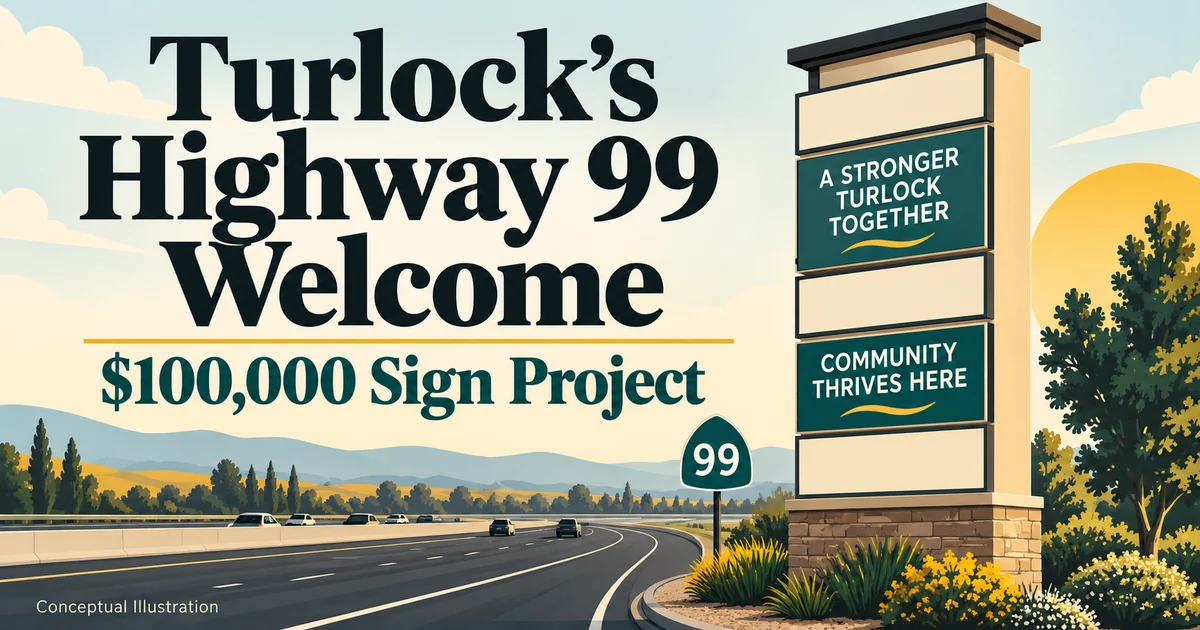
Those empty spaces on tall shopping-center signs beside Highway 99 could soon carry a welcome from Turlock. The City Council has approved $100,000 for community-message panels, using tourism reserves to put existing sign space to work.
The Turlock Journal reports that the council approved the funding Tuesday, October 13. The city’s staff report explains what the money could buy, how private property owners would participate and what still needs to happen before installation.
What the $100,000 Would Buy
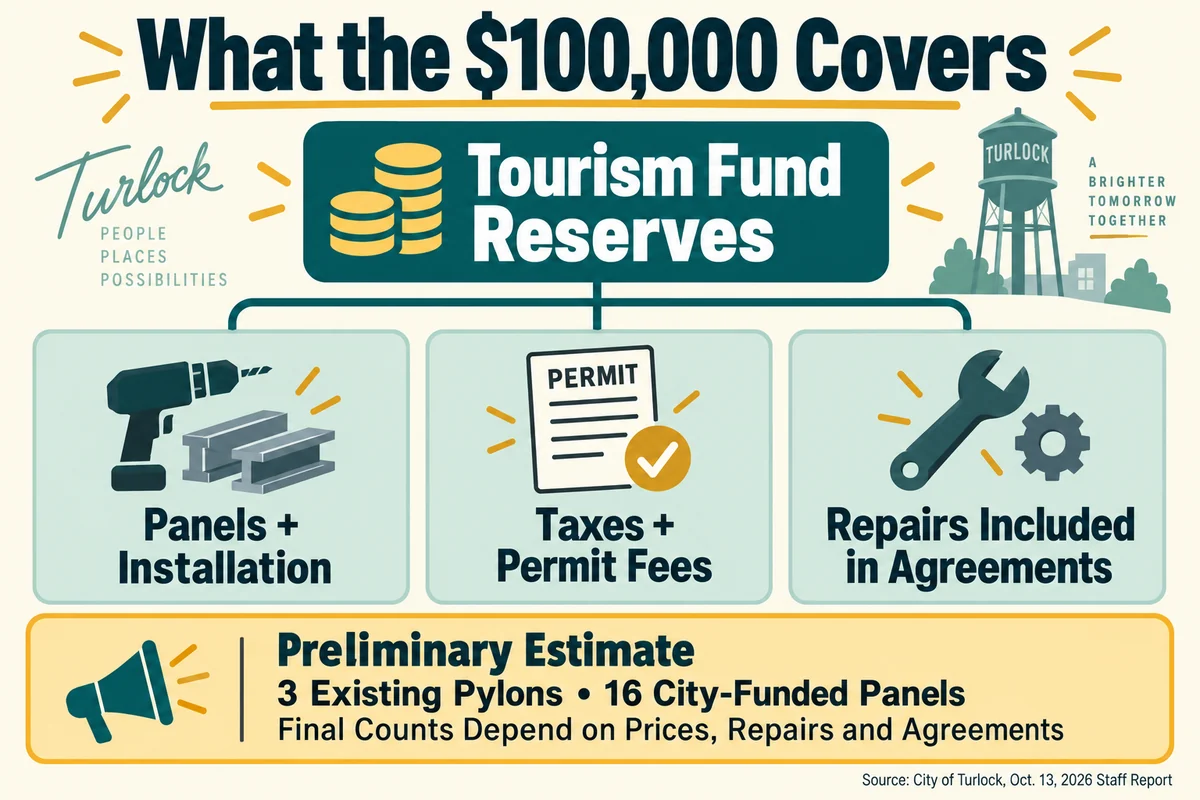
The Highway 99 Community Promotion Project would fill vacant panels on existing pylon signs visible from the freeway. Staff estimated that $100,000 could cover roughly three pylons, using both faces, with 16 city-funded panels in total. Those are preliminary estimates. Actual prices, repair needs and signed property agreements will determine the final count.
The budget comes from unallocated reserves in Fund 120, the city’s tourism fund. It can pay for:
- Making and installing the city’s panels.
- Applicable taxes and permit fees.
- Repairs or repair contributions included in approved property-owner agreements, along with other necessary project costs.
A Welcome in Space That Is Already There
The city wants the panels to improve the appearance of empty signs while making Turlock more visible to visitors, prospective businesses and developers. The Journal quoted public information officer Joseph Spangler offering examples such as “Welcome to Turlock,” “Shop Turlock” and “Come Back Soon.” Those examples describe the idea; the staff report leaves city-panel design to coordination between the city manager and the corresponding property owner.
The location matters. A freeway driver can pass Turlock without seeing its older business district. Our Highway 99 history follows the change from the old route through town to the bypass. Today, the freeway also serves the shopping areas around Monte Vista Avenue and Countryside Drive. Our shopping and dining guide connects those centers with businesses elsewhere in town.
How the Private Signs Would Be Used
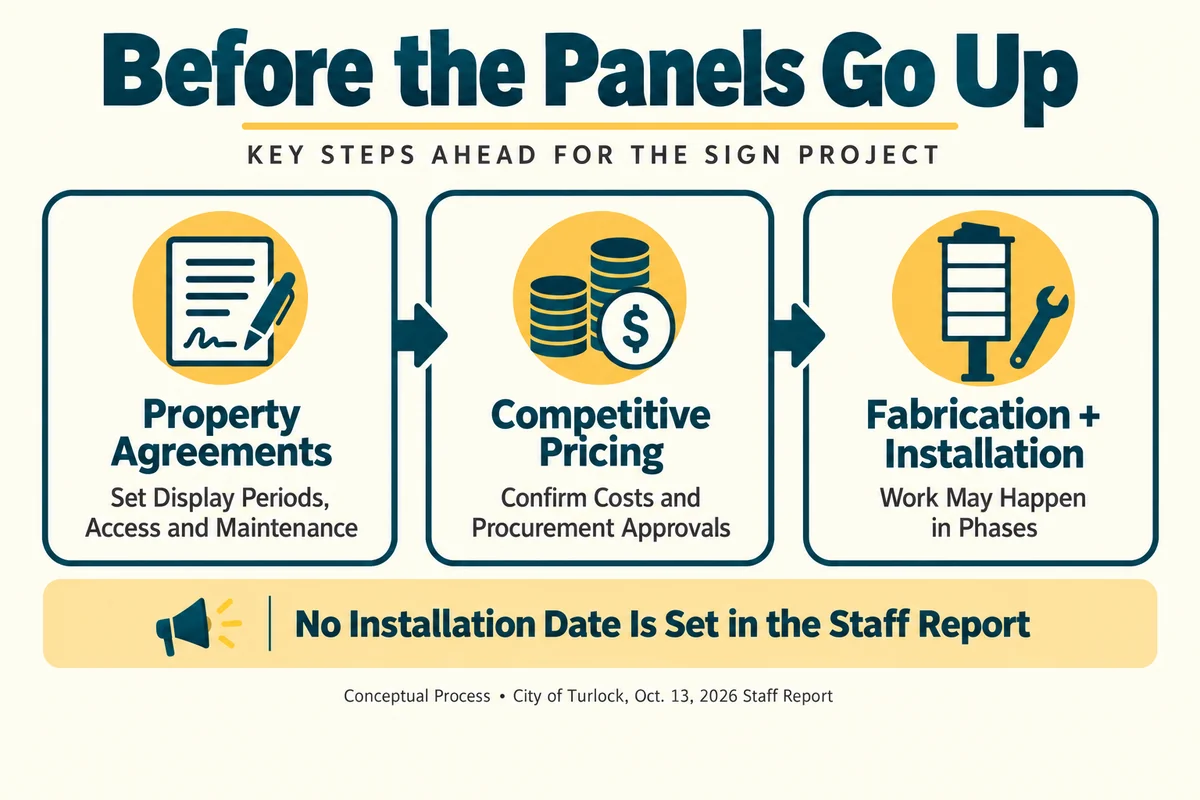
Each participating property owner would have an individual memorandum of understanding with the city. The proposed arrangement allows city-funded panels to remain without ongoing rental charges. Agreements would spell out minimum display periods, access, maintenance, replacement and removal conditions, and protections for the city’s investment.
The community messages could move or come down as businesses occupy the developments and need their own signs, subject to the agreement for that property. That makes the display terms an important part of the purchase: the city needs to know how long its panels can stay and what happens when a tenant needs the space.
Repairs are another variable. Staff identified at least one damaged sign and expected its owner to request city-funded repairs in exchange for use of the sign without rent. The report describes an anticipated request, rather than a completed repair agreement.
Community Partners Would Pay Separately
Stanislaus State and other community partners have expressed interest in buying panels too, according to the staff report. Participating organizations would contract with or pay the city-selected vendor directly for their own panels. Their payments would sit outside the city’s $100,000 expenditure limit. Spending more city money would require further authorization.
What Happens Before Installation
Staff’s early pricing put the anticipated work above the city’s $25,000 formal bidding threshold. The report proposes combining participating locations into a coordinated purchase where practical, to seek competitive prices and consistent fabrication and installation. Contract awards must follow the applicable approval rules, including another council decision if required.
The work may happen in phases as prices and participation become clear. The staff report supplies no installation date. The details to watch next are the participating locations, executed agreements, final panel count and procurement approvals.
You can read the proposal under Action Item 9B in the October 13 council record, which links the staff report, proposed resolution and sample property agreement.