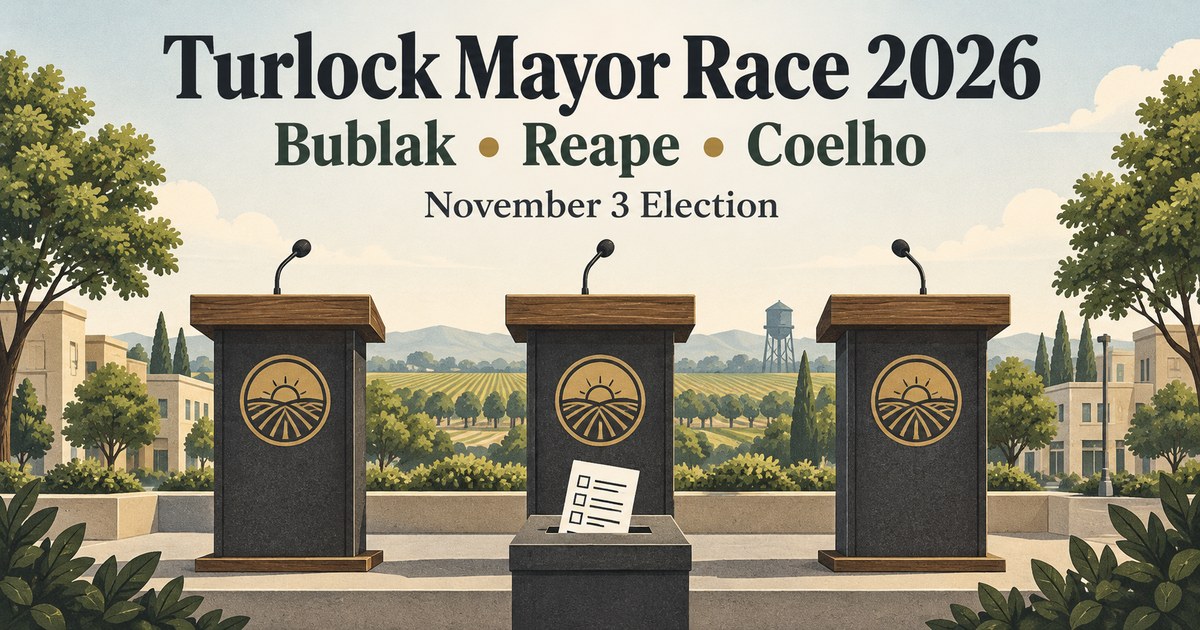
A rough commute, a leadership change at City Hall, a question about a child’s safety: Turlock’s next mayor will face decisions that reach well beyond campaign signs. With the November 3 election approaching, Amy Bublak, Jim Reape and Kelley Coelho are offering different answers about how the city should move forward.
The Turlock mayor race in 2026 came into sharper focus at the October 7 debate at Stanislaus State. The university’s official event listing identifies the three candidates and the Turlock Journal and Modesto Focus as hosts. This is a contest between an incumbent seeking another term and two challengers asking voters to change the city’s approach.
What happened at the October 7 debate?
Hundreds of people turned out for the 90-minute event. According to the Turlock Journal’s debate report, moderators Kristina Hacker and Garth Stapley put questions to the candidates, with audience questions also part of the evening.
The debate gave residents a chance to hear how the candidates would handle disagreements as well as describe their priorities. Three questions are especially useful when comparing the campaign arguments:
- Leadership: How would each candidate help the city retain experienced staff and work through disagreements?
- Services and infrastructure: Which repairs or public-safety investments would come first, and how would they be funded?
- Accountability: What information would residents receive to judge whether a promise was actually delivered?
Meet the three candidates
Amy Bublak: experience and continuity
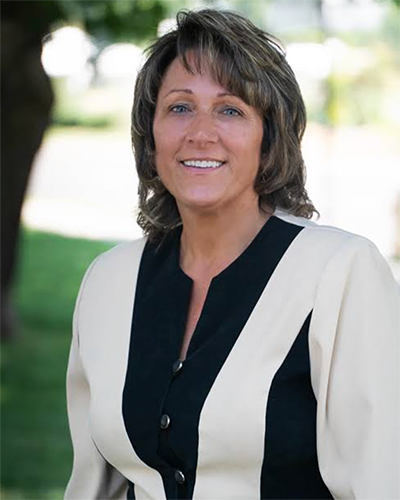
Bublak brings the longest record in elected city office. The city’s official biography says she joined the City Council in 2008 and was first elected mayor in 2018. Her background includes more than two decades in law enforcement and a master’s degree in public administration.
She is seeking a third term. In the Journal’s report on her reelection announcement, Bublak emphasized city finances, public safety and road work. Her case asks voters to judge the administration’s progress and allow it to continue.
Bublak also identified long-term sewer investment as an urgent concern in the Modesto Bee’s candidate questionnaire, republished by AOL, favoring phased work and efforts to find grants and partnerships.
Jim Reape: stability and collaboration
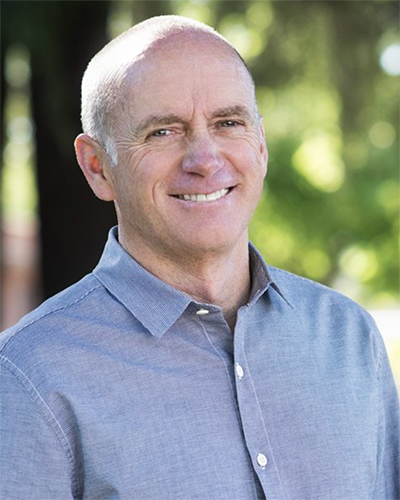
Reape’s campaign website describes him as an Air Force veteran, family nurse practitioner and physician assistant, and longtime Turlock resident. It highlights nine years on the Planning Commission and calls for more stable leadership at City Hall.
His platform emphasizes retaining police officers and firefighters, maintaining roads, updating the General Plan and involving residents in decisions. Those are campaign commitments; voters can ask what staffing, budget and public-participation steps would put them into practice.
Reape’s planning experience also appears in the city’s records: he is listed in Planning Commission meeting materials from 2017. The Bee’s candidate profile identifies this as his first run for elected office.
Kelley Coelho: school safety and public scrutiny
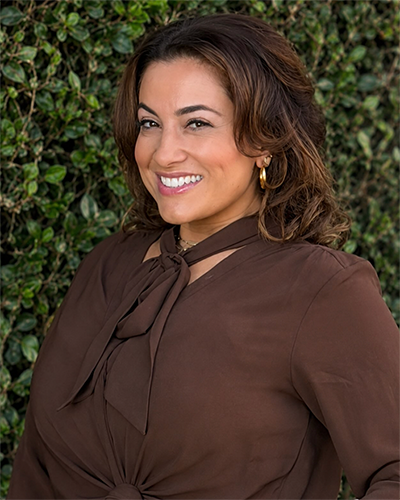
Coelho is an Army veteran, private investigator and small-business owner. The Bee’s candidate profile describes school safety and government accountability as central to her campaign. She owns B&C Investigations and has served on the Stanislaus County Veterans Advisory Commission.
Coelho told the Bee she wants stronger connections among schools, law enforcement, mental-health providers, families and students, along with clearer explanations of public spending. The mayor does not govern Turlock Unified, so the practical question is how those partnerships would work across separate institutions.
Her campaign website also emphasizes transparency, integrity and accountability. Residents evaluating that message can ask which records, meetings or reporting practices she would change.
City Hall: does experience mean stability?
Leadership turnover was a point of friction at the October debate. The Bee’s debate coverage, republished by AOL, reports that Reape linked employee retention to leadership, while Coelho criticized the city’s leadership climate. Bublak challenged the significance of a tally that included acting and interim city managers, pointing to the council’s shared responsibility and other reasons employees leave.
There is a separate financial record to examine. In its August State of Turlock release, the city reported balanced budgets since 2020 and reserves rising from $9.8 million to $35 million. Those are city-reported results, rather than an independent evaluation of every campaign claim.
For residents, the follow-up is concrete: what would the next mayor do to keep capable employees, sustain services and make decisions understandable to the public? A successful answer needs more than a promise to work well with others.
Roads: today’s construction and tomorrow’s maintenance
The road discussion predates the October debate. At the September candidate forum in Ceres, Reape called for planning future maintenance so newly repaired streets do not wear out together. Coelho argued for fixing underlying problems rather than relying on temporary repairs. Bublak stressed that reconstruction also involves infrastructure such as sidewalks and storm drains, according to the Journal’s September forum coverage.
One substantial project gives that debate a real-world reference point. The city announced an approximately $20.3 million construction award for the Geer Road reconstruction project, covering North Golden State Boulevard to Taylor Road. The award followed a unanimous council vote on August 11. Plans include pavement reconstruction, pedestrian improvements and bicycle facilities.
The city anticipated completion in early to mid-2028, depending on weather and other conditions. That is a projected schedule, not a completed achievement. Voters can compare the candidates’ approaches by asking how they would manage construction disruption and fund maintenance after the work is finished.
Public safety: different approaches to oversight and staffing
The Bee’s October debate report describes Bublak defending Modesto’s administrative role with Turlock Fire. Reape emphasized firefighter retention and a local fire chief; Coelho opposed the Modesto contract. The candidates also discussed automated license-plate readers: Bublak pointed to policies and audits, while Reape raised oversight of movement data and Coelho stressed accountability.
Those positions leave useful questions for residents: what level of service would change, what would it cost, and who would check that it works? For surveillance tools, the same test includes who may access records and how misuse would be investigated. See the full Bee debate report for the wider exchange.
Data centers: growth, utility costs and conditions
A separate development question is whether Turlock should welcome a data center. In a September 30 Bee comparison of the candidates’ positions, the issue was hypothetical rather than a pending application identified on the city’s active-project list at that time.
- Bublak opposed a center under the conditions then being discussed, citing water, power, infrastructure and the balance between costs and benefits.
- Reape opposed development that would raise water or electricity costs or reduce availability for existing users.
- Coelho favored reviewing a proposal individually, with developer-funded infrastructure, enforceable protections and continuing oversight; she also allowed for a temporary pause while rules were developed.
These are positions from that September report, not a prediction of any future project vote. If a proposal emerges, residents can ask who pays for upgrades, how impacts are measured and what happens if promised benefits do not materialize.
How to vote in Turlock’s November 3 election
Use official election resources to confirm your registration and voting plan. The Stanislaus County voter-registration page explains the regular registration deadline and the in-person conditional-registration process available afterward.
- October 19: regular voter-registration deadline.
- October 20 through November 3: conditional registration is available through the county’s in-person process.
- November 3: Election Day; vote centers are open from 7 a.m. to 8 p.m.
The county’s official voting-locations list identifies these Turlock vote centers:
- Hampton Inn, 1821 Lander Avenue: opens October 24.
- Assyrian American Civic Club, 2618 N. Golden State Boulevard: opens October 31.
- Calvary Baptist Church, 700 E. Monte Vista Avenue: opens October 31.
- Turlock Library, 550 N. Minaret Avenue: opens October 31.
Early-voting hours are 8 a.m. to 5 p.m. through November 2. Registered county voters may use any Stanislaus County vote center. Check the official list for ballot-drop boxes and their hours, which can differ from vote-center hours.
Planning to mail your ballot? The county’s mail-early notice recommends allowing at least seven days before Election Day. Mail ballots must be postmarked by November 3 and arrive within seven days afterward. Closer to the deadline, consult the notice about an official drop box or obtaining a manual postmark inside a post office.
Keep reading, then put your questions to the candidates
The Journal said a full recording of the October 7 debate would be released the following week; an October recording was not verified when this story was prepared on October 11. An earlier September candidate forum is available to watch. It is a different event and should not be confused with the Stanislaus State debate.
Before casting a ballot, compare the linked reporting, read the candidates’ own platforms and choose the questions that matter most to your household. Ask for priorities, costs and timelines. Check your registration now, make a voting plan and share the official election resources with a neighbor who needs them.