Last updated
You can start November stargazing in Turlock with a chair and a clear patch of sky. The month offers two Taurid meteor windows, a compact star cluster worth finding with binoculars, and a full Moon on November 24. For help getting oriented, MJC’s Great Valley Museum has a Science Night on November 6.
The Journal’s November sky calendar by Jim Brugger and Fred Yerzy highlights Saturn and the star clusters in Taurus. Here are a few manageable targets and dates to put on the calendar, with the equipment matched to what you want to see.
Find the Pleiades
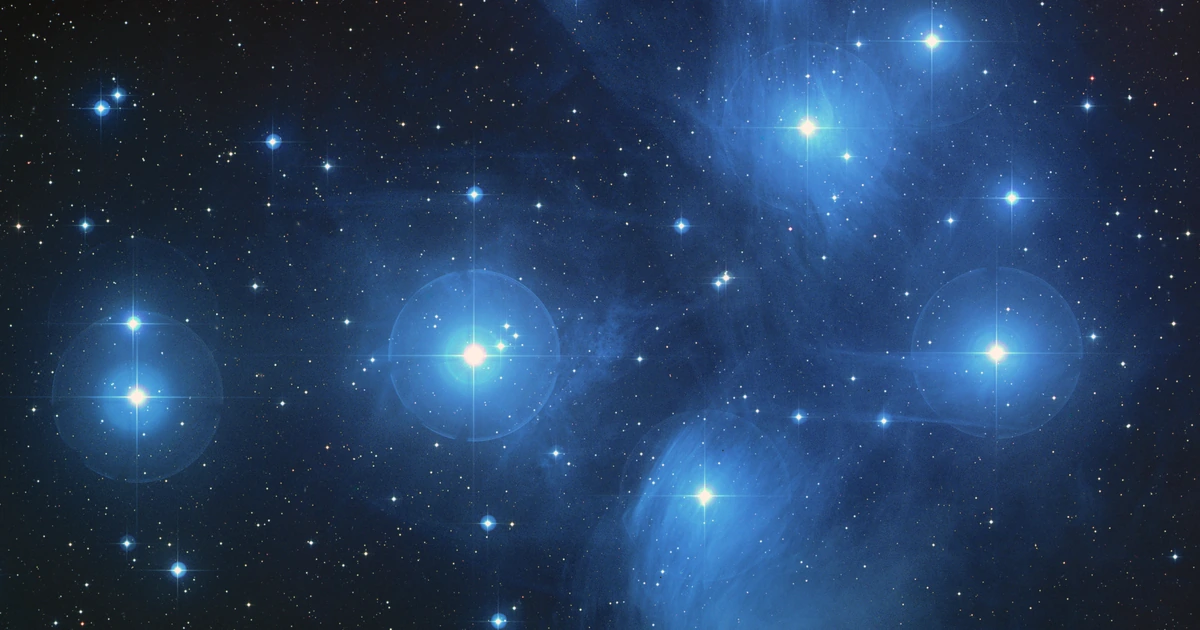
The Pleiades, also called the Seven Sisters, look like a small, close-packed group of stars. They make a useful beginner target because the grouping is recognizable without learning an entire constellation. The blue clouds in the header photograph come from astronomical imaging; that is not the view to expect with your eyes.
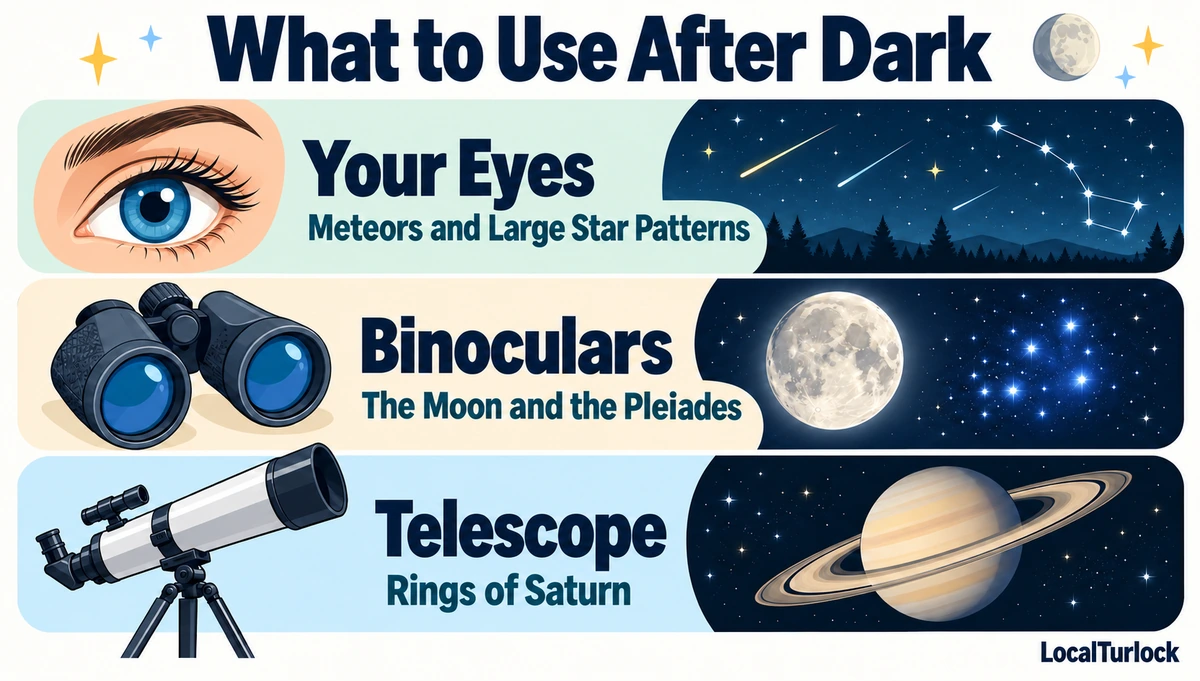
NASA’s binocular guide recommends ordinary binoculars in the 7×35 to 10×50 range for targets including the Moon and Pleiades. If you already have a pair for birdwatching, try those before buying astronomy equipment. Higher magnification can make a handheld view harder to steady.
- Your eyes: use them for meteor watching and getting familiar with broad star patterns.
- Binoculars: bring out more stars in the Pleiades and more detail on the Moon.
- A telescope: is the next step for resolving Saturn’s rings. Do not expect ordinary handheld binoculars to deliver that view.
Two Taurid Nights to Put on the Calendar
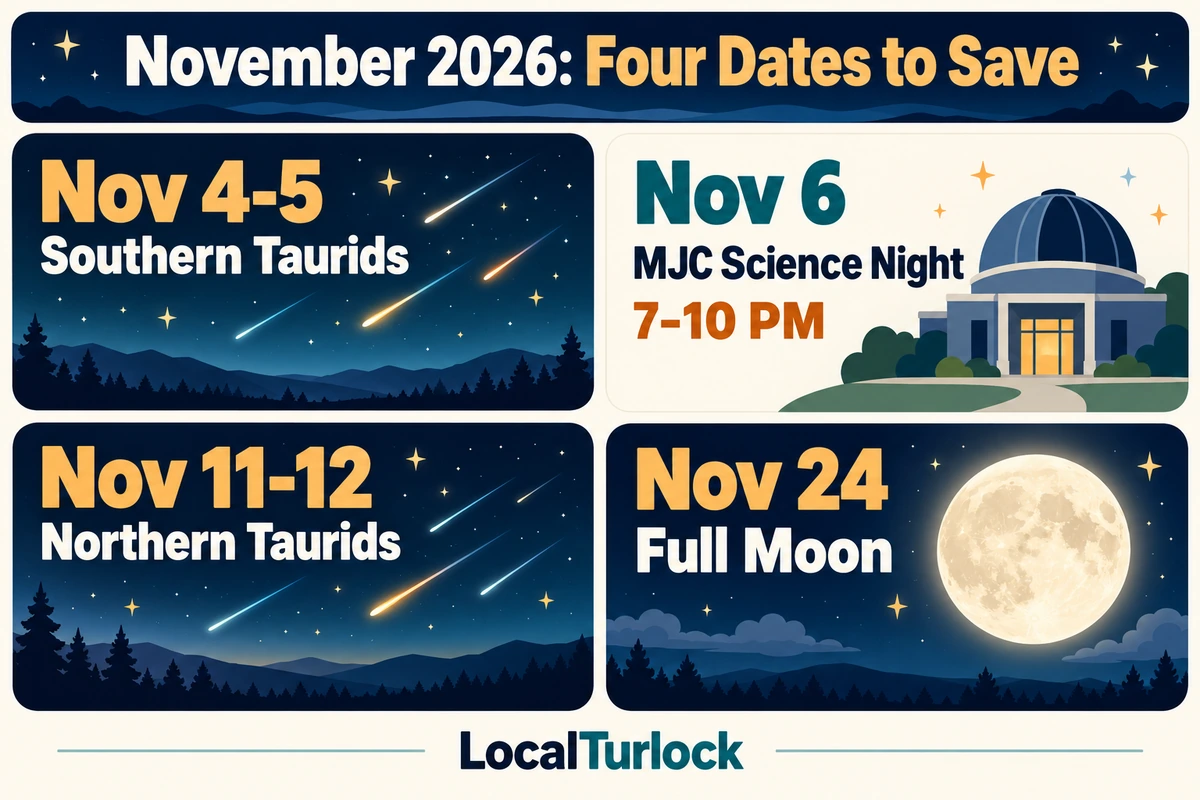
The American Meteor Society’s 2026 calendar lists November 4-5 for the Southern Taurids and November 11-12 for the Northern Taurids. Those are nights spanning two dates: begin on the first date and continue into the next morning if conditions and your schedule allow.
The Taurids are associated with bright fireballs, but a date on the calendar is not a promise of a busy sky. The society lists relatively limited moonlight for both windows this year, particularly November 11-12. A clear, darker location still matters more than watching from directly beneath a bright porch light.
Leave the binoculars down for meteors so you can watch a broad area. NASA’s meteor-viewing advice is to allow 20-30 minutes for your eyes to adjust and avoid bright lights, including your phone. Read the plan before going outside, bring a comfortable seat and give the sky some uninterrupted time.
November 24 Is the Full Moon
The month’s full Moon falls on November 24, as listed in both the local calendar and timeanddate’s November sky guide. It is an easy date to remember for a simple Moon-watching evening. It serves a different purpose from a dark-sky meteor outing: you are looking at the bright object rather than trying to spot faint streaks beside it.
Try MJC’s November 6 Science Night
If you would rather start with an organized outing, the Great Valley Museum’s official schedule lists Friday, November 6, from 7 to 10 p.m. for Science Night at the Museum. The Journal also lists planetarium shows and a rooftop observatory among the evening’s attractions.
The museum and William R. Luebke Planetarium are in the Science Community Center on MJC’s West Campus, 2201 Blue Gum Avenue, Modesto. Use that destination, rather than the college’s East Campus address.
The museum currently lists $8 general museum admission and $8 general planetarium admission separately. Youth under 18, seniors 55 and older, and military visitors are listed at $5 for each. Do not assume one ticket covers both. Use the official page’s ticket links for the November 6 offerings and any specific showtimes before planning the evening around a particular presentation.
The planetarium’s visitor information says doors do not reopen once a program begins, and food and drinks stay outside. The museum does not recommend planetarium shows for children under five. For a younger child, that distinction may matter more than the length of the drive.
Before Heading Outside
A backyard is a reasonable place to learn a bright target. For darker skies, choose a location with confirmed after-dark access, a clear view and a place to park. Bring a chair and warm layers so you can settle in without cutting the evening short.
Check the National Weather Service forecast for Turlock that afternoon, and choose one target for the first evening. For the museum outing, check the November 6 tickets and presentation times through the official links above.
What Have You Spotted Above Turlock?
What is the most memorable thing you have seen in the night sky around here? Share the story on our Facebook post.
For more nearby outings, browse the Turlock Guide and our community events calendar.