
Last updated
A bottle of Barefoot, a can of High Noon and the name above Modesto’s performing-arts center have a family connection. The business behind those drinks began in a rented Modesto building in 1933. It grew into wineries, vineyards, glass furnaces and a worldwide distribution network—with Livingston operations and a long employment connection to Turlock’s university.
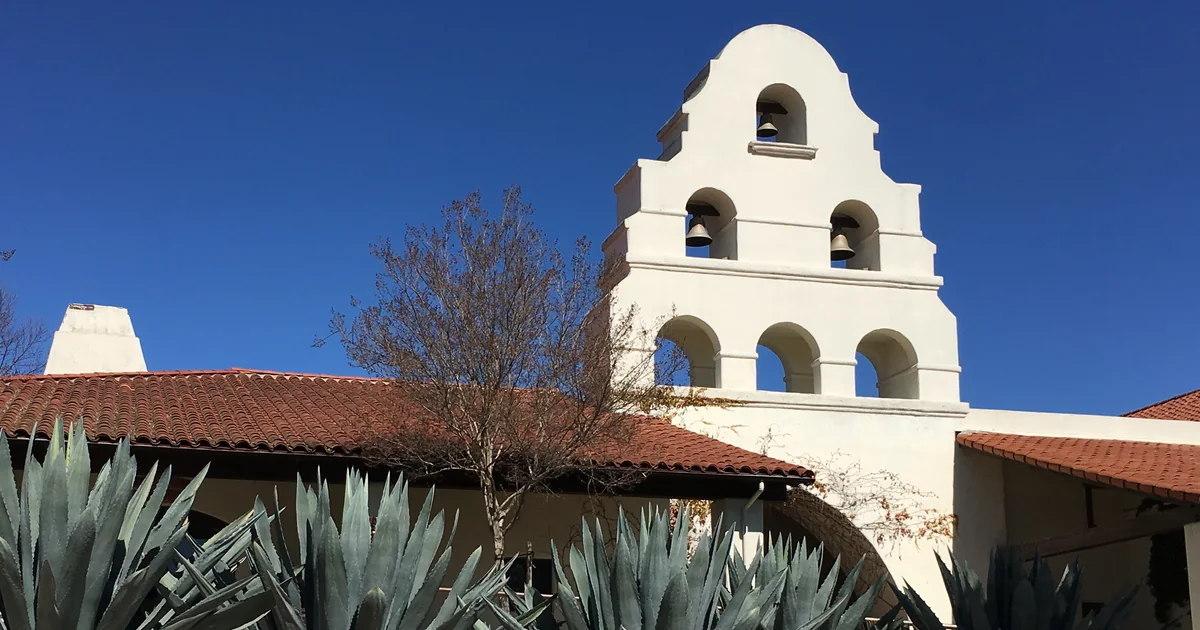
The company now calls itself GALLO. Many Valley residents still know it as E. & J. Gallo Winery, the name of its founders, Ernest and Julio. Bottling, engineering, laboratory testing, sales, logistics and recruitment are all part of the work beyond the vineyard.
Jump to The brothers’ start · Modesto and Livingston · Gallo Glass · Familiar brands · The arts and Stan State · Labor and water · Jobs and visiting.
A winery started before Prohibition ended
GALLO dates its founding to September 22, 1933. National Prohibition ended on December 5 that year, when the Twenty-first Amendment was ratified. The brothers were preparing for a market about to reopen. The Federal Judicial Center’s Prohibition timeline puts the national dates in order.
In his 1971 oral history for UC Berkeley, Ernest recalled starting under a temporary permit in anticipation of repeal. He and Julio were 24 and 23. They pooled $5,900.23 and rented a Modesto & Empire Traction Company building for $60 a month. Equipment bought on credit included a crusher, a press and redwood tanks; the payments depended on selling the wine they had yet to make.
The brothers had grown up around grapes, but commercial winemaking required more knowledge. Ernest remembered a librarian directing him to pamphlets in the basement of Modesto’s library. Two University of California publications by Frederic T. Bioletti explained fermentation and clarification. The librarian let him take them. Ernest handled sales; Julio concentrated on production. The division of work remained important as the business grew.
You can still locate their first building at 11th and D streets, Modesto. In March 2026, a mural reproducing a 1940s cream-sherry advertisement was installed on its exterior. John Holland’s Bee report says the company still owned the Founders Building and had installed a commemorative plaque in 1994. Its current interior use was not disclosed.
Modesto and Livingston do different parts of the work
The headquarters is in Modesto. Livingston became a major vineyard and winemaking location south of Turlock. Those two places appear repeatedly in the company’s history:
- 1942: The purchase of Valley Agricultural Company included what is now Livingston Ranch.
- 1943: Bottling operations moved from Los Angeles to Modesto.
- 1958: Ernest and Julio established Gallo Glass to manufacture bottles.
- 1967: Long-term grower contracts supported plantings of particular grape varieties.
- 1970: Livingston Winery was established, a milestone also recorded in Livingston’s civic history.
- 1976: An oak cellar was constructed in Modesto.
The move into vineyards on the coast broadened the wine business. Gallo bought half of Sonoma’s Frei Brothers Ranch in 1971, acquired Louis M. Martini in Napa in 2002, and bought Bridlewood Estate Winery in Santa Ynez in 2004. The Bridlewood photograph at the top of this page shows that Central Coast property, rather than the industrial Modesto winery.
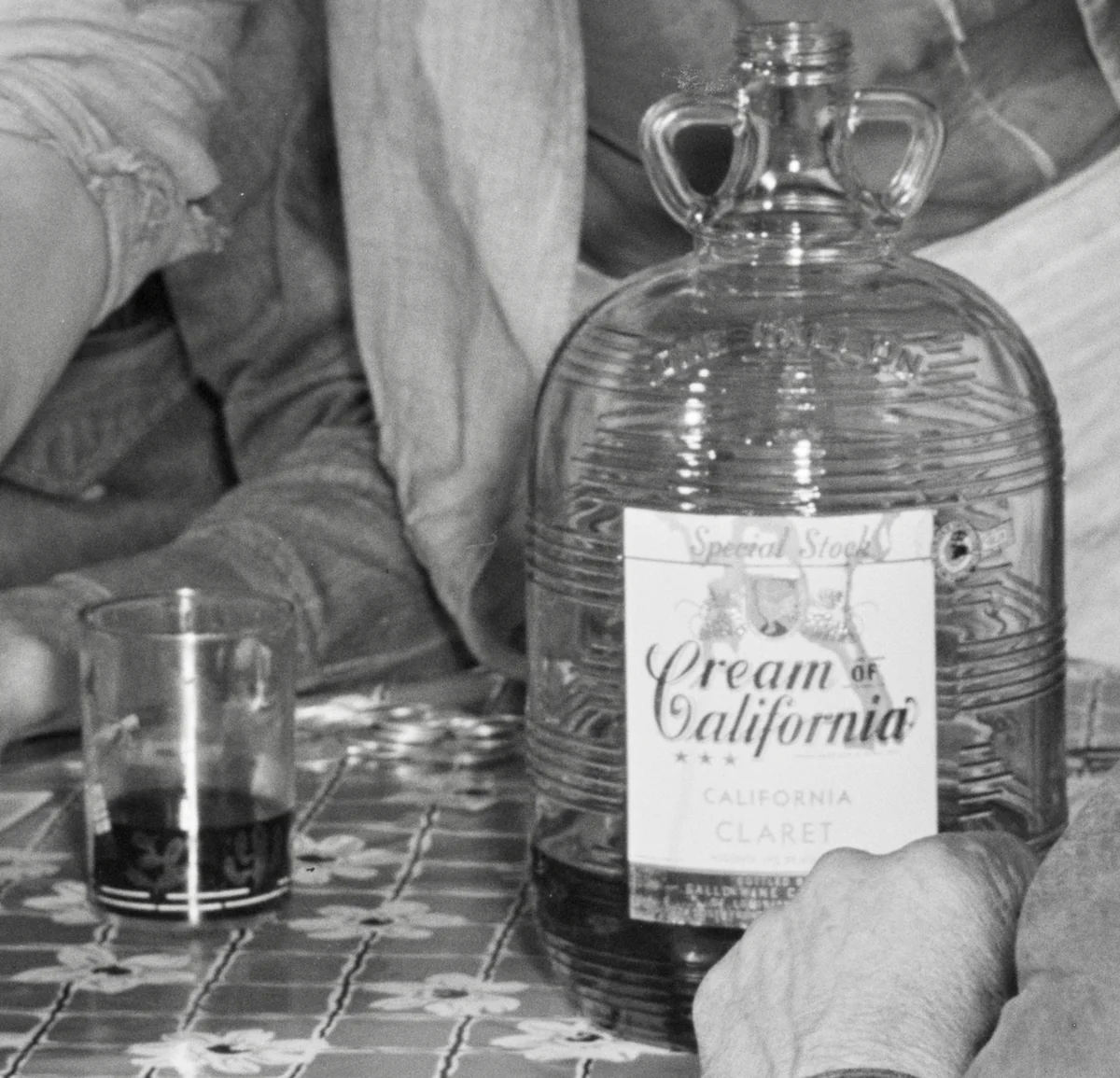
The bottle in this 1941 photograph had already traveled far from Modesto. Farm Security Administration photographer Marion Post Wolcott photographed it during a card game in Delacroix, Louisiana. Its Cream of California Claret label identifies the Gallo winery in Modesto. A government photograph made for an entirely different purpose captured an early example of the company’s reach.
Livingston’s facility is at 18000 W. River Road, Livingston, according to the state’s water-system record. It is an industrial workplace. For a day out in the surrounding town, our Livingston guide covers its downtown and Yamato Colony history.
The glass bottle is a local manufacturing story
Wine needs a container, and Gallo made that part of the business too. Gallo Glass produces wine and spirits bottles in Modesto. Glassmaking adds furnace operation, forming equipment, maintenance and quality control to the region’s agricultural work. Growing grapes and operating a glass plant require very different skills.
In its June 2026 sustainability report, the company describes recycled bottles being sorted and crushed into cullet at Halo Glass Recycling, then supplied to Gallo Glass. It reports average recycled content above 50 percent in its bottles. The same report describes Livingston’s water-to-energy plant treating process water, generating biogas and supporting reuse for irrigation.
A 2024 U.S. Department of Energy review also documents a proposed hybrid electric glass furnace at the Modesto plant. The proposed technology would change how the plant melts glass, one of its most energy-intensive operations.
Why so many familiar labels lead back to Gallo
The current portfolio includes Barefoot, Carlo Rossi, André, Apothic, Black Box, High Noon, New Amsterdam and RumChata. Some names carry the family surname; many do not. The portfolio also includes import and distribution partnerships, so a label appearing on Gallo’s website does not by itself mean the company bought the producer or makes that drink in Modesto.
A large expansion came in January 2021, when Gallo completed a transaction with Constellation Brands covering more than 30 brands and five wineries in California, Washington and New York. Black Box, Clos du Bois and Mark West were among the acquired names. The acquisition added existing businesses to a company that had begun with two brothers making their own wine.
On February 13, 2024, the company shortened its public name to GALLO. Chief Marketing Officer Stephanie Gallo explained that the broader name reflected both four generations of family involvement and a business extending into spirits and other drinks. The change was a new company identity, with a redesigned logo. The business remained privately held and family-owned.
The expansion continued in April 2026, when GALLO completed its acquisition of Four Roses Bourbon from Kirin. The announcement said Four Roses’ existing team and master distiller Brent Elliott would remain. Its distillery and warehouse operations are in Kentucky. The purchase connects a familiar bourbon to the Modesto-based company without moving its production to the Valley.
Leadership has passed to later generations. Ernest J. Gallo took over as president and CEO in 2020, as described in the announced succession plan. He is a third-generation family executive, not co-founder Ernest, who died in 2007. Joseph Farms cheese is another business altogether: Joseph Gallo, the founders’ younger brother, developed the separate dairy and cheese enterprise.
The Gallo name on a Modesto stage—and at Stan State
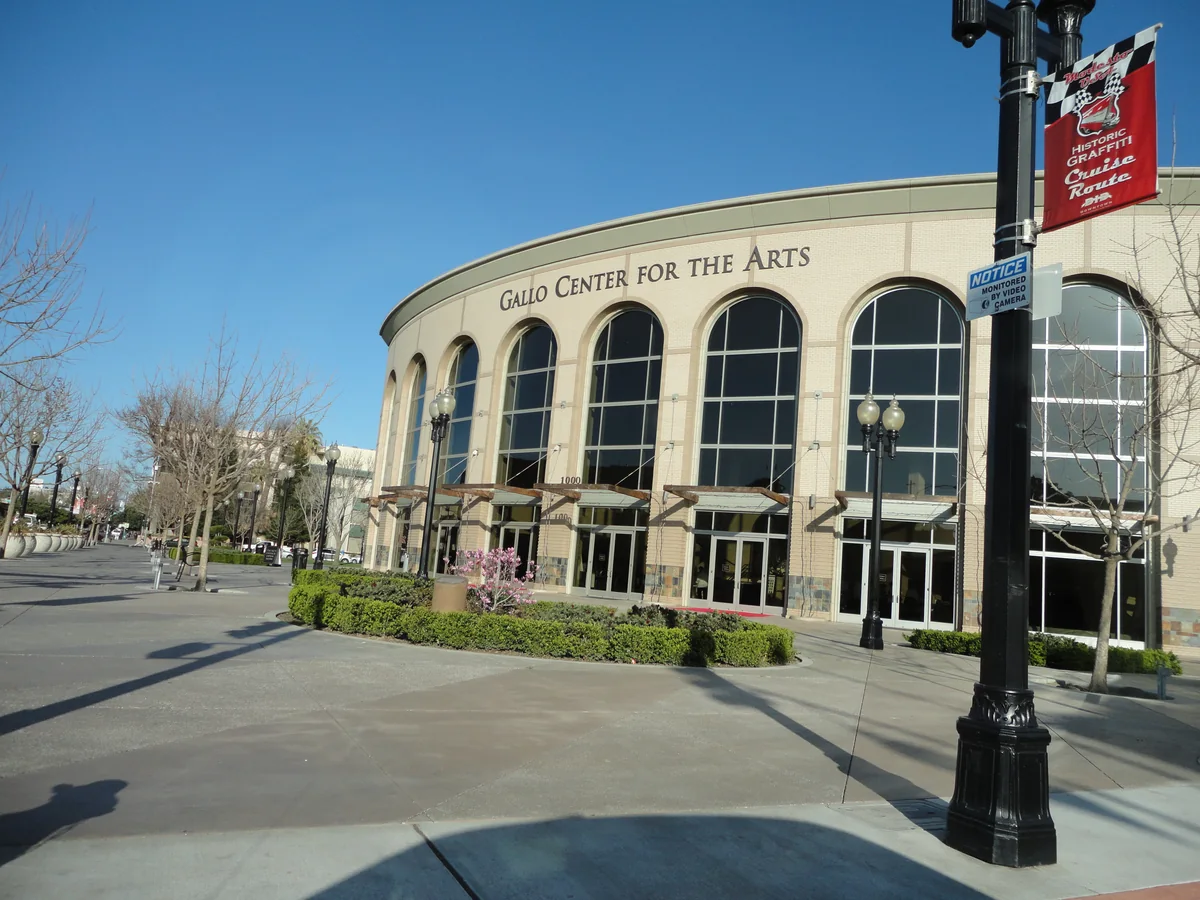
The Gallo Center for the Arts history begins with a 1997 request from Mayor Dick Lang to Marie Damrell Gallo to lead a feasibility effort. Construction began in 2004, and the center opened in 2007. Stanislaus County owns the building; the nonprofit Gallo Center for the Arts, Inc. operates it.
The initial endowment included $10 million from the Gallo family and $5 million from the Mary Stuart Rogers Foundation. That brings together two names familiar from Valley scholarships and philanthropy; our Mary Stuart Rogers profile explains the other family connection. The public venue is at 1000 I Street, Modesto. Its performance calendar is a practical place to look for an evening out.
Turlock’s clearest employment connection is Stanislaus State. A January 2024 university report counted more than 460 alumni working at Gallo at that time. The examples were varied: Deb Juergenson brought a geology degree into winemaking, Rachel Williams moved from psychology into human resources, and David Booth discussed the value of his Stan State MBA.
The university hosted another Gallo recruiting and career event in April 2026, with an information session, résumé workshops and recruiter networking. For students, the company is an employer with scientific, business and manufacturing roles alongside its vineyards.
Labor disputes and a water penalty belong in the history too
Gallo became a target of the United Farm Workers’ national boycott in 1973 after the winery’s vineyard labor contracts shifted to the Teamsters. The UFW’s history places the end of the grape, lettuce and Gallo-wine boycotts in 1978, following California’s 1975 farm-labor law and an inter-union jurisdiction agreement.
The company and union offered different accounts of how that change happened. A contemporary 1976 report includes both sides: Gallo disputed engineering the union switch and described problems with the UFW hiring hall, while the union challenged representation and benefits. The disagreement made a bottle of wine a national labor issue.
A more recent regulatory matter concerned Livingston. In February 2023, the Central Valley Water Board announced a $378,668 penalty for an August 2021 discharge of more than 90,000 gallons of wastewater mixed with irrigation well water into the Merced River. The board reported that Gallo installed additional check valves to prevent backflow. Half the penalty was directed to a Hagaman Park wastewater project and half to the state cleanup and abatement account.
Finding local jobs and planning a visit
Use the official Gallo careers site and search Modesto or Livingston. Listings span manufacturing, maintenance, engineering, finance, information technology and internships. Read the actual facility and shift before applying: a Modesto office job, a Livingston production role and a position at a coastal winery can have the same parent company but entirely different commutes.
The company has also reduced capacity at some sites. The Bee reported 20 layoffs at its Lodi crush facility in June 2026; GALLO said other regional wineries had capacity and described transition support and available alternative roles.
- For an application: Start with the employer’s current job listing, including its location and shift.
- For a show: Book through the Gallo Center for the Arts; use our Modesto guide to plan nearby stops.
- For winery visits: Follow the individual estate’s visitor information. The industrial Modesto and Livingston sites have different purposes from public tasting rooms.
For a commute starting in Turlock, start with our Turlock Transit guide to routes, fares and a first bus ride. The Roger K. Fall Transit Center guide explains regional connections. Compare the return service with the end of your shift. Our Turlock FAQ covers other employers, transportation and living costs, and the Foster Farms article follows another Valley company whose local plants and ownership have changed.
