
Last updated
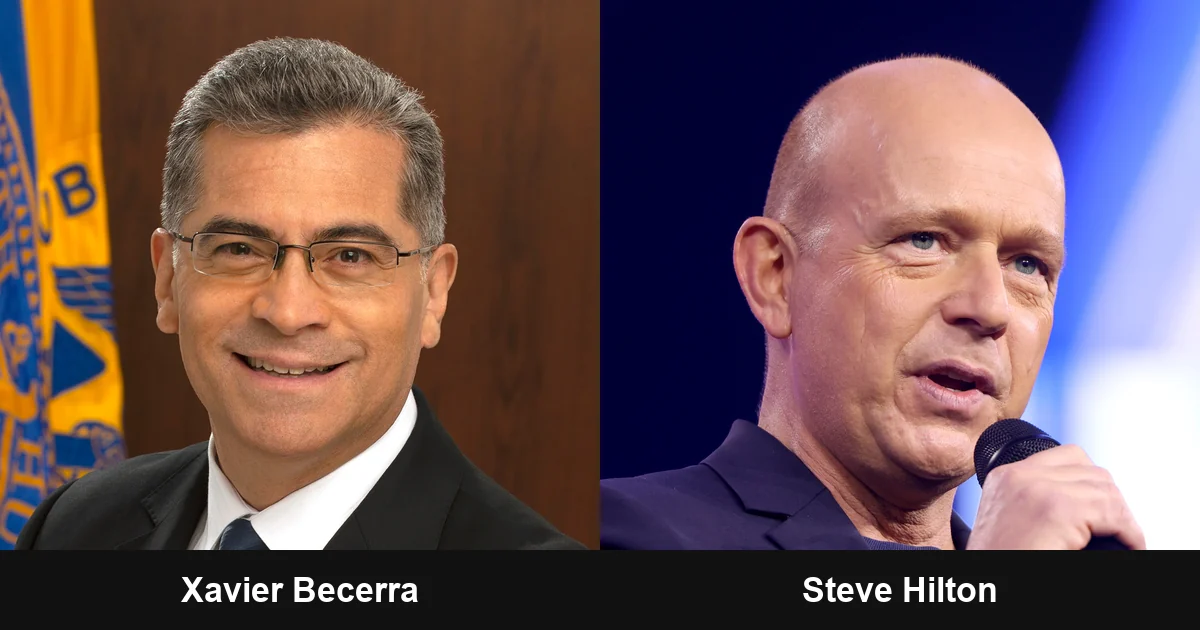
California voters are choosing a new governor on November 3. Gavin Newsom has reached the two-term limit, and the choice is between Democrat Xavier Becerra, a former attorney general and U.S. health secretary, and Republican Steve Hilton, a former British political adviser and Fox News host. They disagree about taxes, housing, health care and the state’s relationship with Washington. On water, one surprise: Hilton wants more storage but opposes the Delta tunnel.
On this page: The ballot · The candidates · Governor’s powers · Taxes and bills · Housing · Health care · Schools · Safety and immigration · Water · Debate and polls · How to vote
Two finalists, and a change at the top
The Secretary of State’s certified candidate list (PDF) confirms Becerra and Hilton as the November finalists. This is a statewide race: Turlock residents see the same two choices regardless of their city council or congressional district.
In the June primary, Becerra received 2,591,857 votes, or 28.0%; Hilton received 2,277,318, or 24.6%. Democrat Tom Steyer finished third at 22.8%. The certified primary results (PDF) explain how the field narrowed under California’s top-two system. June’s percentages came from a crowded field, so they are not a forecast of the two-person November vote.
There is an unusual gap in the official governor candidate guide: neither finalist submitted a candidate statement or photograph. Their names remain on the ballot. The pages linked below provide their proposals and reporting on their records.
Xavier Becerra and Steve Hilton: very different routes to this race
Xavier Becerra was born in Sacramento in 1958 and earned undergraduate and law degrees at Stanford. He served in the California Assembly, then represented Los Angeles in the U.S. House from 1993 to 2017. He became California attorney general in 2017 and served as President Joe Biden’s Health and Human Services secretary from 2021 to 2025. His official congressional biography records those offices; he did not represent Turlock in Congress.
The Attorney General’s historical biography describes Becerra’s early legal work representing people with mental illness and his family’s path from immigrant and working-class roots. His campaign draws on that government experience, especially consumer protection and health coverage.
Steve Hilton was born in Britain and advised Conservative Prime Minister David Cameron before moving to California in 2012. He later co-founded the political fundraising platform Crowdpac and hosted Fox News’ The Next Revolution. He became a U.S. citizen in 2021 and has not held elected office. CalMatters’ July profile follows those changes in his career, including his British “Big Society” work and his California policy organization, Golden Together.
Hilton’s campaign argues that Democratic control in Sacramento has produced costs and rules that need a much larger reset. Becerra argues that his experience would help protect Californians and deliver practical improvements. Their respective Becerra policy pages and Hilton policy pages are campaign sources: useful for understanding what each promises, alongside independent reporting on the costs and tradeoffs.
What a governor can change—and what needs other votes
The governor runs the executive branch, oversees most state agencies, appoints officials and judges, and signs or vetoes legislation. The state voter guide’s description of the office also includes proposing laws, presenting the budget and directing state emergency resources.
A governor proposes the annual budget, but the Legislature passes it. The governor can sign, veto or reduce particular appropriations through the line-item veto. The Department of Finance’s budget explanation is a useful way to assess promises involving large tax cuts or new benefits: both require money and, generally, legislative cooperation. Changing an agency’s priorities is different from passing a new tax law.
Taxes, gasoline and electricity: compare the mechanism
Hilton’s current income-tax proposal exempts the first $150,000 of income from California state income tax and applies an 8% flat rate above that amount. He confirmed those figures in his October 5 KQED interview. Federal taxes and other state and local taxes would still exist. The interview also pressed him on the revenue loss and which spending would be reduced.
His gasoline plan targets $3 a gallon through lower taxes and fewer climate and refinery restrictions. His electricity proposal seeks to roll back renewable-energy mandates and expand competition among power sources. Those are proposed policy changes and price targets; oil markets, supply and utility costs would still affect the final bills.
Becerra’s affordability platform emphasizes consumer enforcement, childcare help and action against unjustified price increases. His energy platform supports continuing the clean-energy transition with stronger attention to reliability and cost. A separate Power Hour proposal would offer eligible lower- and middle-income households up to two free midday electricity hours. Eligibility and implementation would need to be established.
The Turlock detail: TID is a community-owned utility, and its own board approves its electric rates. Its rate-plan explanation describes that local process. The California Public Utilities Commission distinguishes locally governed public utilities from the investor-owned utilities it regulates. State energy policy still matters, but neither candidate’s statewide slogan automatically changes a TID customer’s bill. Read our Turlock Irrigation District history for the district’s local roots.
Housing: faster approvals, with different priorities
Both candidates say California needs more homes and a faster approval process. Becerra’s housing plan proposes a housing emergency, coordinated state delivery teams, funding for approved affordable projects, more predictable approvals and stronger enforcement of local housing commitments. It also supports renter protections and smaller ownership options such as condos and duplexes.
Hilton’s starter-home proposal emphasizes houses with yards and a $50,000 combined cap on development fees, permits and government mandates. He would restrict private environmental-law challenges to housing. His new-communities plan seeks a long building program with housing, roads, water and public facilities planned together. It does not identify Turlock as a selected site.
A lower fee does not make the need for roads, sewers or schools disappear. The practical comparison is who would pay for those services, how much housing each approach could produce, and whether that housing would be affordable to the people seeking it.
Health care: coverage versus a different purchasing model
Becerra’s health-care platform calls for protecting coverage after federal cuts, identifying rural and safety-net providers at risk, lowering prescription costs, expanding telehealth and supporting the medical workforce. He proposes loan assistance and incentives for primary care, behavioral health and rural medicine.
Hilton’s health-care proposal would require clearer advance prices for nonemergency care. He also proposes personal health accounts for working-age Medi-Cal adults who are not elderly or disabled, beginning in a willing region. That redesign would require federal approval; it is not an account people can enroll in today.
CalMatters’ health-care comparison found unanswered financing questions in both approaches. Becerra had not detailed how all promised coverage would be paid for, while Hilton had not established the costs or savings of his proposed accounts. Both support using the state’s CalRx purchasing effort to reduce drug costs.
Schools and training: a detailed reading plan and a less-defined agenda
Hilton has made third-grade reading, phonics, school performance and accountability prominent campaign subjects. Becerra’s education agenda has been less detailed, with public support for early childhood investment and community-college access. Diana Lambert’s EdSource reporting, republished by Stocktonia compares those approaches and the views of education leaders. Their expectations about a candidate are different from a funded program.
The state budget supports public schools and higher education, including Stanislaus State. Local school boards still make many day-to-day decisions. For the governor’s race, look for commitments on school funding, reading instruction, college access and training for jobs, along with how the candidate would pay for them.
Public safety, homelessness and immigration
Becerra’s homelessness plan combines housing-first programs with behavioral-health and addiction care, prevention, rental assistance and more shelter capacity. It also proposes public performance measures and consequences for programs that fail to retain people in housing.
In the October 5 KQED interview, Hilton described moving people off the streets into triage facilities with services and housing differentiated by need. Asked about California’s sanctuary law, he said he disagreed with it but would follow it; he answered no when asked whether he would dismantle or overhaul it.
Becerra’s federal-relations platform promises resistance to federal actions he views as threatening health care, wages, housing or immigrant protections. Hilton emphasizes cooperation against dangerous offenders. State law controls what California agencies do; federal immigration law is a separate authority. Their disagreement is over how the state should use its own powers and respond to Washington.
Water: the sharpest Valley comparison
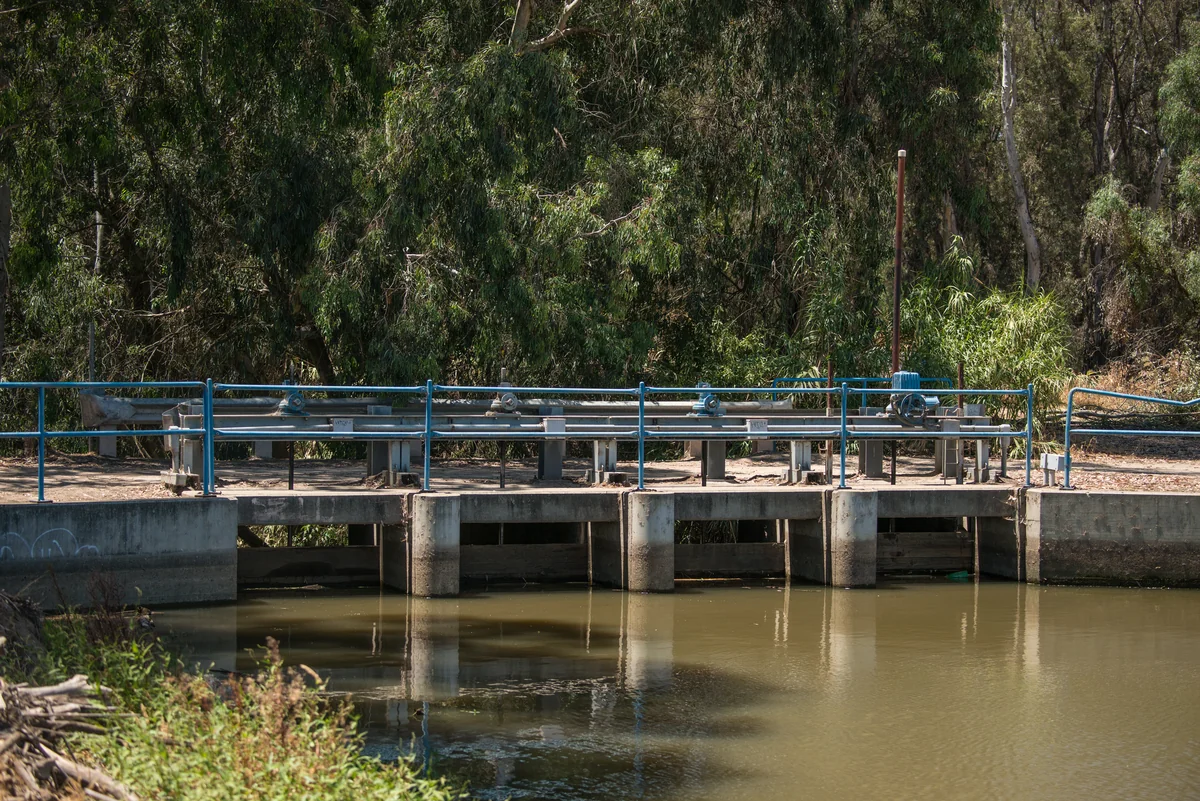
In Rachel Becker’s October water reporting for CalMatters, Hilton backs Sites Reservoir, raising Shasta Dam, recycling and desalination. He wants more water for farms and households with fewer environmental constraints. He explicitly opposes the Delta tunnel.
Becerra had not supplied a detailed water blueprint to CalMatters. His campaign promised modern infrastructure, safe affordable drinking water and reliable farm and business supplies. He has kept the tunnel under consideration rather than endorsing it. At an April Fresno forum, both candidates recognized groundwater concerns and regulatory burdens; Becerra defended the need for management rules.
More storage and diversion bring costs and conflicts over fisheries, river flows and tribal interests. Those objections matter alongside farm supply. Hilton’s campaign water plan proposes dedicating 2% of the state General Fund to infrastructure and affordability, with spending reductions elsewhere. How that investment would be financed and distributed remains part of the policy choice.
For local water history, see Turlock Irrigation District and Don Pedro Dam. The governor’s water agenda reaches across multiple watersheds, agencies and funding systems; it is not a direct promise of a particular delivery to a Turlock farm.
The September debate and a dated polling snapshot
Becerra and Hilton debated on CNN on September 30. CNN’s announcement identifies the one-hour format and moderators Jake Tapper and Dana Bash. The debate has already happened; it is not an upcoming event.
Jeanne Kuang’s debate report for CalMatters describes Becerra repeatedly connecting Hilton to President Donald Trump, while Hilton pressed affordability and criticized Democratic leadership in Sacramento. Housing and immigration were among the exchanges. Both also supported expansion of film-production tax credits, a point of agreement that received less attention than their clashes.
The September PPIC survey, conducted September 4–10, put Becerra at 60% and Hilton at 38% among likely voters statewide. Its broader Central Valley subgroup showed Hilton at 52% and Becerra at 46%. That subgroup is not a Turlock or Stanislaus County poll. The results describe those respondents at that time, rather than votes already cast or a guaranteed outcome.
Voting in Stanislaus County
- October 19: deadline for regular online voter registration for this election. Register or update your registration
- October 20–November 3: eligible voters who miss that deadline can use conditional registration in person at an appropriate election office or voting location.
- November 3: Election Day. Polls are open 7 a.m.–8 p.m.; in-person ballot return ends at 8 p.m.
- Voting by mail: the ballot must be postmarked by November 3 and received by November 10. Mail early; if returning a ballot late, use an official drop-off location or get a manual postmark inside a post office.
The official election calendar supplies the deadlines. Use California’s voter-status service to check your registration and the official voting-location lookup for an appropriate location.
Stanislaus County’s elections office is at 1021 I Street, Suite 101, Modesto. The Secretary of State’s county directory lists 209-525-5200 and Stanislaus County election information. For the rest of the ballot, see our November 2026 voter guide. Find the officials serving your address in Who Represents Turlock?.
