
Last updated
Adam Gray lost his first congressional race by 564 votes. Two years later, he won the rematch by 187. Those margins brought the Merced native to Washington after a decade in the California Assembly, where water storage and medical education had been recurring priorities. For part of Turlock, he is now the person to call when a federal agency will not answer.
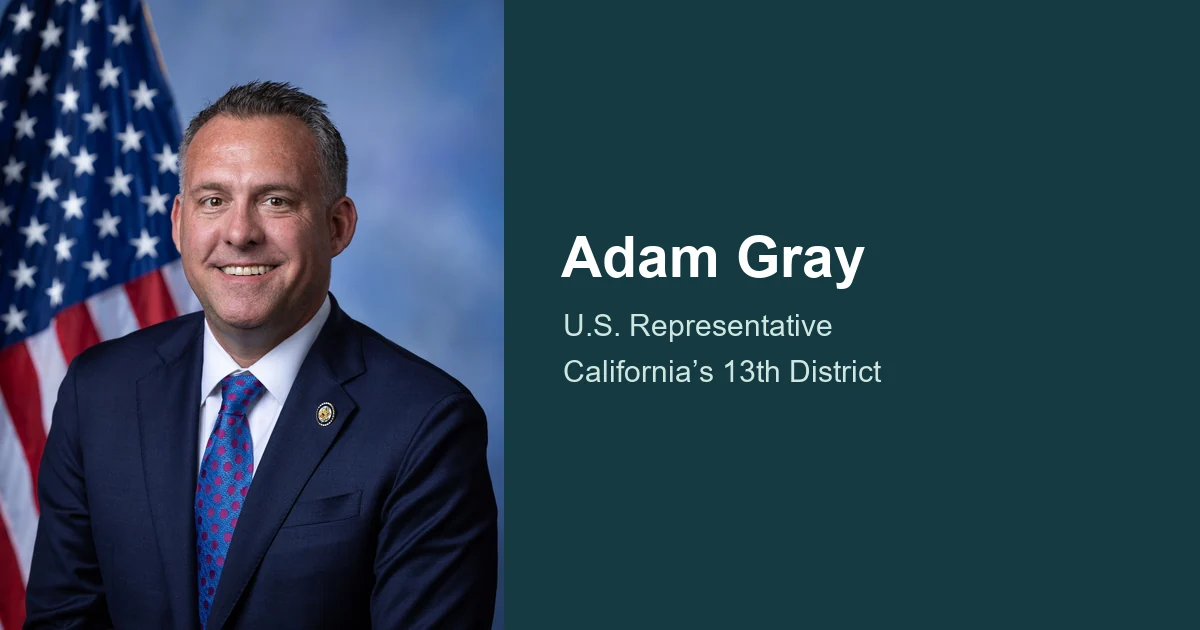
Current office: Democratic U.S. representative for California’s 13th District, serving since January 3, 2025. Turlock is divided between the current 13th and 5th districts. Use the House’s address lookup to find your member. The November 2026 election uses new congressional boundaries; current representation continues until January 3, 2027.
A Merced upbringing and ten years in Sacramento
Gray was born in Merced in 1977 and graduated from Golden Valley High School in 1996. He earned his bachelor’s degree at UC Santa Barbara in 2000, then worked as a staff member in the California Assembly and Senate before running for office himself. The House historian’s biography records his Assembly service from 2012 through 2022 and his subsequent work as a business owner and UC Merced faculty member.
His state district included communities in Merced and Stanislaus counties. Water was a practical concern in that district, alongside the difficulty of finding enough health professionals for Valley communities. His official biography describes the California Problem Solvers Caucus he founded and his work with colleagues on water storage and a UC Merced medical program. In Congress, he serves as whip of the Blue Dog Coalition, a group of Democrats associated with fiscal moderation and bipartisan work.
The caucus story predates his congressional campaign. In a 2024 Turlock Journal interview, Gray dated the Sacramento group’s founding to 2017 and pointed to a water bond, medical education and flood-plain restoration among the accomplishments he wanted voters to assess.
The two elections that brought him to Congress
- 2022: Republican John Duarte defeated Gray, 67,060 votes to 66,496. The certified results put the difference at 564 votes.
- 2024: Gray won the rematch, 105,554 to 105,367. The state’s final tally shows a 187-vote difference. Its percentages round both candidates to 50.0%; the vote totals explain the result more clearly.
- 2026: The certified November ballot pairs Gray with Republican Kevin Lincoln in the 13th District. The general election is November 3.
Gray began his first congressional term in January 2025. Winning a seat is separate from holding every city within its mailing area: a Turlock postal address does not, by itself, establish which congressional district a resident is in. For an agency problem today, use the current House lookup. For the November election, use the district printed on your county ballot.
Water storage, permits and power
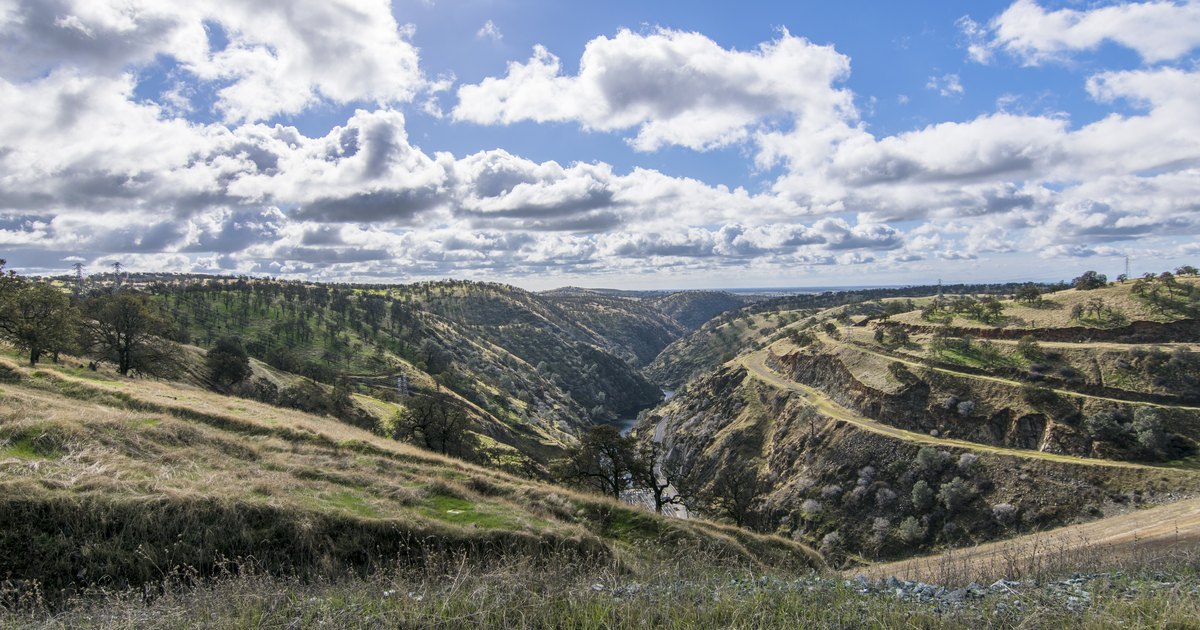
Gray’s December 2025 water legislative package proposed three related changes. The Central Valley Water Solution Act would authorize storage projects south of the Delta. The WATER Act would change interagency coordination and permitting. The Build Now Act would set an enforceable one-year timetable for certain environmental reviews of projects that expand Central Valley storage. They were introduced as legislation; introduction alone does not construct a reservoir or appropriate its full cost.
The proposals received support quoted by his office from Westlands Water District and several Valley water agencies. Their shared argument was that dependable supply requires projects to move from plans to construction more quickly. Permitting changes also affect how environmental impacts are examined, so the scope of a review and the money to build a project remain separate questions.
In March 2026, Gray welcomed an Interior Department announcement of $540 million for California water infrastructure while arguing more investment was needed. He said an earlier amendment he offered for $8 billion in western water funding had failed.
A separate July 2026 proposal, the CURRENT Act with Republican David Rouzer, focused on water-quality certification and federal permitting, including hydropower licensing. The connection to the Turlock area is straightforward: irrigation systems, reservoirs and electricity generation are closely linked here. Our Turlock Irrigation District history explains how that local system developed.
The long effort to train more Valley doctors
Medical education was an Assembly-era project involving universities, legislators and local health leaders. At a January 2020 meeting, the UC Regents recorded Gray’s account of advocating for a 2013 study and working with UC Merced and UCSF on a regional training partnership. He argued that educating students from the Valley could help keep doctors in the Valley. The minutes also record a regent thanking him for that advocacy.
In Washington, Gray’s health-policy work has included H.R. 4849, the Protecting Health Care and Lowering Costs Act. The introduced bill would repeal health-related provisions of the 2025 reconciliation law and extend Affordable Care Act premium tax credits.
Two votes that show where he stands
Gray voted no on the final House vote for the 2025 reconciliation bill, H.R. 1, on July 3. The official roll call shows the measure passing 218–214. His later health-care bill sought to reverse parts of that law, while his water statements welcomed some of its infrastructure funding. Those positions concern different provisions of a large package.
He also voted yes on the Laken Riley Act on January 22, 2025, joining 45 other Democrats and all voting Republicans. The law signed January 29 expanded required immigration detention for certain noncitizens connected to specified offenses. An arrest or charge can trigger the rule; a conviction is not always required. That vote places Gray on the record supporting a stricter detention measure, despite most House Democrats opposing it.
Committee work and help for constituents
His committee assignments include Agriculture and Natural Resources. The Agriculture subcommittees cover livestock, dairy and poultry; forestry and horticulture; and commodity markets, digital assets and rural development. His Natural Resources assignment is Water, Wildlife and Fisheries. For a region with farms, dairies and irrigation districts, those assignments put him in hearings where local industries meet federal rules.
For policy questions or help with a federal agency, start with Gray’s official congressional office. Its Merced office is at 602 W. 20th Street, Suite B, Merced, CA 95340; call 209-226-6880. The Washington office number is 202-225-1947.
The office also lists internships, military-academy nominations, the Congressional Art Competition, grant assistance and Washington visits. For an agency case, have the relevant letter, application or claim number ready and ask which authorization the staff needs to inquire on your behalf. Congressional casework can seek a response; it does not replace the agency’s decision process.
See Local Turlock’s representatives directory for county and state contacts. For the other current House district serving part of town, read our Tom McClintock profile.
