
Last updated
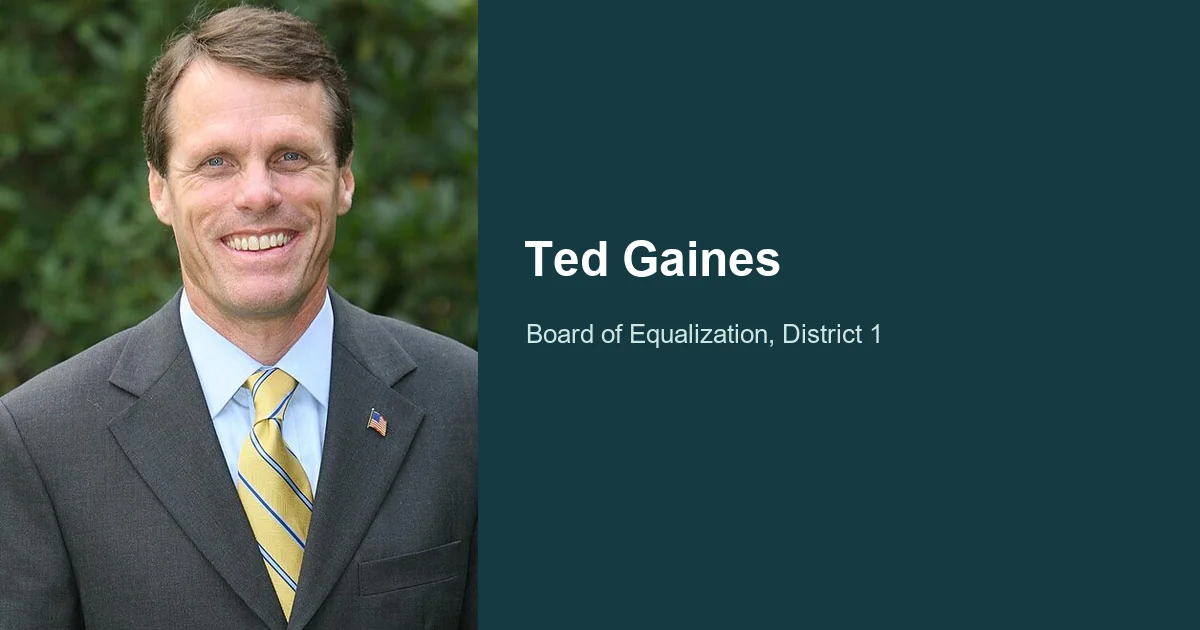
Ted Gaines represents Stanislaus County on the California State Board of Equalization. For Turlock homeowners, the board’s rules affect inherited homes, moves and property assessments. County offices apply those statewide rules to individual properties.
Who he represents and how he reached the board
Gaines is a Republican serving his second elected term as the First District member of the California State Board of Equalization, or BOE. He won the seat in 2018 and was reelected in November 2022. In 2026 he is the board’s vice chair. The official district list includes Stanislaus, Merced, San Joaquin and Tuolumne counties in District 1, along with a large portion of inland and northern California.
His official biography records service on the Roseville Planning Commission from 1997 to 1999, election to the Placer County Board of Supervisors in 2000 and reelection in 2004. He then spent 12 years in the California Legislature. He has owned Gaines Insurance for more than three decades and lives in El Dorado County.
What the Board of Equalization does
The BOE was created in 1879 to help make county property assessments consistent. Its agency history explains a major change in 2017 and 2018: sales-tax administration and most business-tax appeals moved to separate agencies. The elected board retained constitutional duties, including property-tax oversight, state-assessed property and specified insurance and alcohol-tax responsibilities.
Ordinary houses and locally assessed business properties are valued by county assessors. The BOE supplies rules, guidance and oversight for that system. It directly assesses certain utility and railroad properties that extend across county boundaries. A member’s district office can explain resources and raise statewide concerns; it does not replace the county assessor or automatically rewrite a homeowner’s tax bill.

The 2026–27 state-assessed roll lists $915,217,273 in state-assessed property allocated to Stanislaus County, up 1.07 percent from the prior year. This is assessed value, not $915 million in taxes collected, and it is not the county’s total property roll.
Gaines’s emphasis on Proposition 13
Gaines describes himself as a taxpayer advocate. As board chair, he issued a May 12, 2025 request for a Proposition 13 informational hearing. He proposed examining the measure’s history, amendments, split-roll proposals, other taxes and fees, and savings for homeowners and businesses. His request emphasized protecting Proposition 13’s limits and examining efforts to work around them.
An informational hearing can bring arguments and evidence into the public record, but it does not amend the Constitution. A BOE member can oppose a proposed tax change; the board must still administer the laws voters and lawmakers enact.
Inherited homes and the different parts of Proposition 19
The BOE’s current Proposition 19 guidance covers tax-base transfers when eligible owners move and reassessment exclusions for inherited family homes and farms. A parent’s low assessed value does not automatically carry over to every property a child inherits. The current intergenerational rules require qualifying property and specific conditions; rental property is treated differently from an eligible family residence.
For eligible family-home and farm transfers from February 16, 2025, through February 15, 2027, the adjusted additional-value amount is $1,044,586. That figure is part of an eligibility and assessment calculation, rather than an unrestricted exemption. The board’s comparison charts and FAQs explain residency requirements, filings and value limits. Transfer dates and the property’s intended use affect which rules apply.
In a March 23, 2021 board discussion, page 92, Gaines asked whether wildfire and natural-disaster victims would receive Proposition 19’s benefits even if related legislative language omitted a reference. Staff confirmed that the initiative and proposed rule included those protections.
Disaster damage and the county assessor
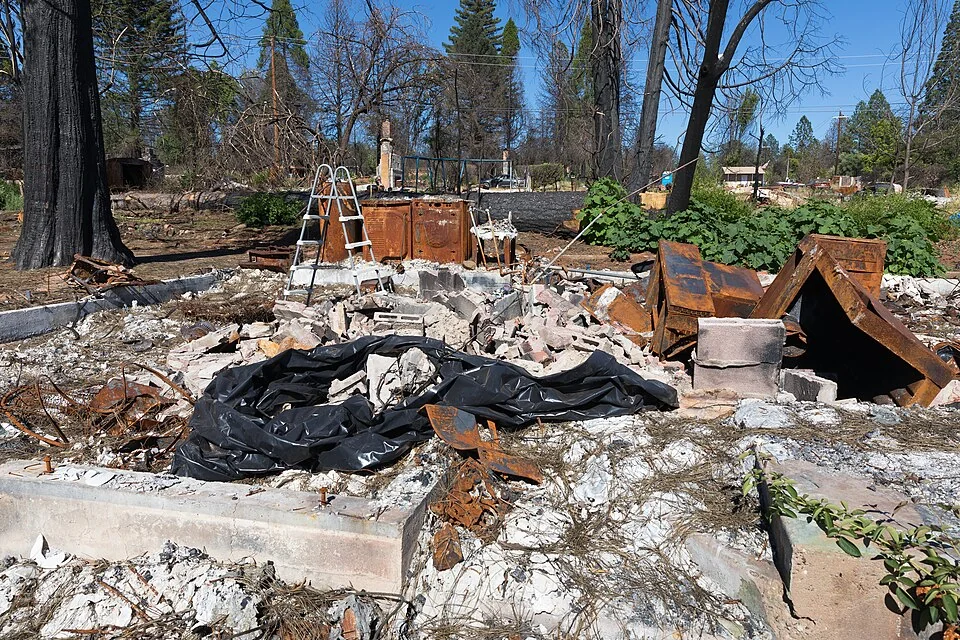
The BOE disaster-relief page explains reassessment for property damaged by a qualifying calamity. The estimated loss must generally be at least $10,000 in current market value, and a claim goes to the county assessor within the applicable deadline. The reassessment reflects the damaged condition. Replacement-property and reconstruction relief have additional requirements.
The debate over keeping an elected tax board
The BOE’s reduced role has fueled debate over whether the elected board should continue. In May 2026 reporting, CalMatters described former controller and board member Betty Yee’s position that remaining duties could be transferred elsewhere. Supporters, including the Howard Jarvis Taxpayers Association, argued that an elected board gives taxpayers an accountable forum. Current chair Sally Lieber defended the agency’s size and its role as a place for residents to bring concerns.
The 2017 reorganization followed audits and controversy before Gaines joined the board.
The open 2026 seat and where to get help
Gaines is finishing his second elected BOE term. The board’s legal handbook explains the two-term limit. The certified November 2026 list names Democrat Nelson Esparza and Republican Shannon Grove in the District 1 contest. Gaines is the current officeholder, rather than a candidate in that successor race; the next term begins in January 2027.
- Questions for Gaines’s district office: official office website, 916-445-2181, 500 Capitol Mall, Suite 620, Sacramento, CA 95814.
- A Stanislaus property assessment: contact the assessor at 209-525-6461, 1010 10th Street, Suite 2400, Modesto, CA 95354.
- A formal valuation appeal: the county assessment-appeals instructions identify the independent appeals board, regular-assessment filing period and separate supplemental-assessment deadline. Read the instructions for the bill you received, since the deadlines differ.
Related officials: Vito Chiesa, Stanislaus County supervisor · Turlock’s representatives and public offices.
