
Last updated
California Secretary of State Shirley Weber certifies statewide election results, maintains the voter-registration system and oversees election rules. Her office also handles business filings and keeps the state’s historical archives.
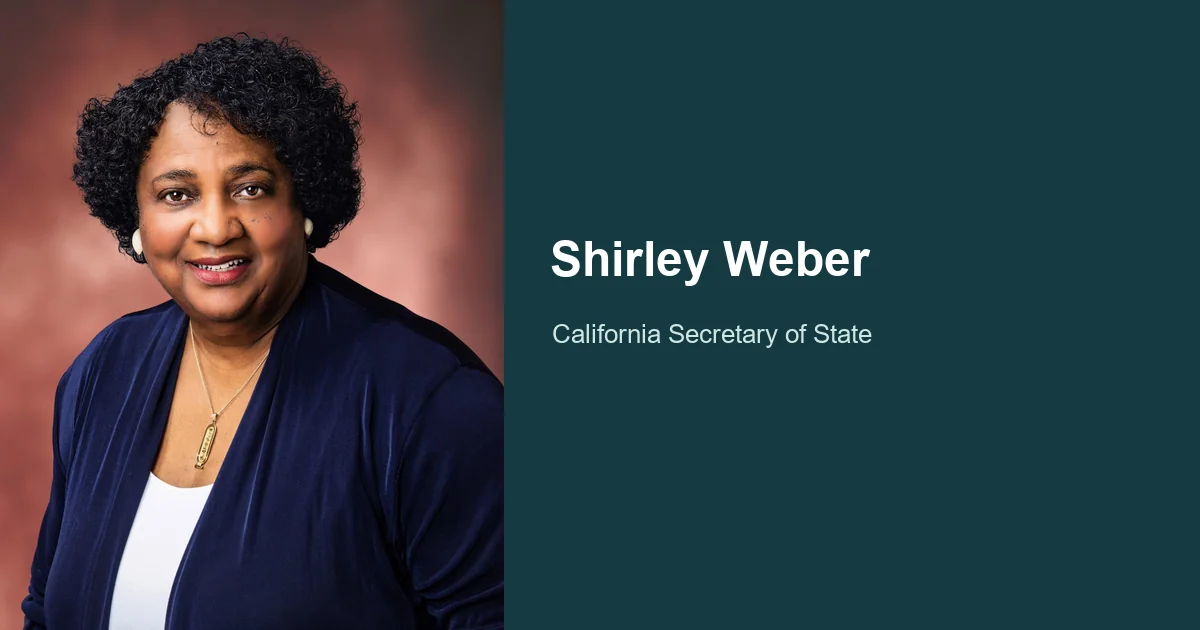
A family history shaped by the right to vote
Shirley Nash Weber became California’s 32nd secretary of state on January 29, 2021, following Gov. Gavin Newsom’s nomination. She was the first Black Californian to hold the office. Voters elected her to a full term in November 2022. She is a Democrat and is on the November 2026 ballot against Republican Don Wagner.
Her official biography connects her politics to a family history in the Jim Crow South. She was born in Hope, Arkansas, to sharecroppers; her father did not have the opportunity to vote until his 30s. The family moved to California when she was three. Weber earned bachelor’s, master’s and doctoral degrees at UCLA by age 26, having begun teaching at San Diego State University at 23. She spent 40 years in its Africana Studies department, including terms as chair.
Before statewide office, she served on the San Diego Unified school board and spent four terms in the Assembly representing the San Diego region.
Her Assembly record: the change in police use-of-force law
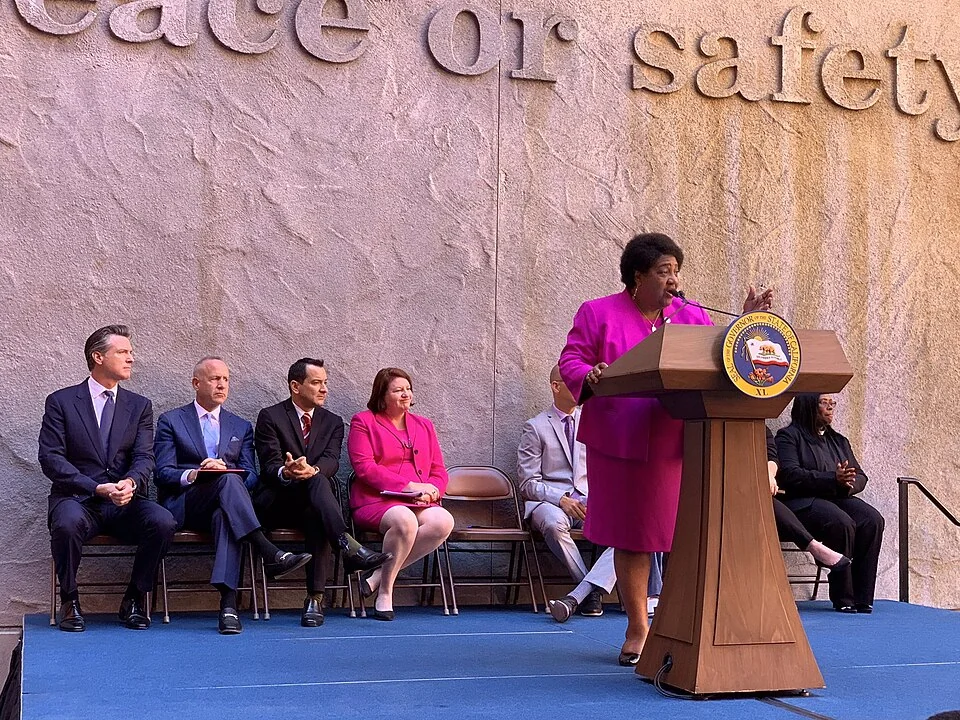
Weber authored AB 392, signed by Newsom on August 19, 2019. The governor’s announcement explained the change: police deadly force could be used only when necessary, with attention to other techniques when safe. It changed rules and training for law-enforcement agencies statewide.
CalMatters’ reporting on the signing describes a negotiated bill. Civil-rights advocates wanted tighter limits on shootings, while law-enforcement groups had warned that earlier language could put officers at risk. Changes brought major police groups to a neutral position. The final law also allowed prosecutors to consider events leading up to a shooting, as well as the moment an officer fired.
Why election-night totals are not the final result
The state’s explanation of the canvass says the secretary of state compiles and certifies statewide returns, but county election offices process the ballots. In Stanislaus County, the local election staff handle such tasks as checking return-envelope signatures and resolving ballot problems. Later updates in a city race reflect the continuing county count, not votes cast after the election.
In an April 2026 interview with CalMatters, Wagner criticized the long counting period and Weber’s efforts to change it. He proposed faster certification, voter identification and ending universal mailed ballots. Those proposals would require changes in state law; the secretary could not enact them alone. Weber defended prioritizing an accurate count and including every eligible ballot. CalMatters also reported criticism from disability advocates who unsuccessfully challenged restrictions on returning ballots electronically.
The state’s November 2026 calendar allows ballots postmarked by Election Day to arrive by November 10, followed by canvassing and certification.
The voter-data fight
On January 15, 2026, Weber’s office announced that a federal district court had dismissed the U.S. Justice Department’s demand for the full California voter database without leave to amend. The requested information included sensitive fields such as Social Security and driver’s-license numbers, home addresses, party affiliation and voting history. Weber argued that the state had a duty to protect that information.
The database records participation and registration; it does not reveal a voter’s choices on a secret ballot. The dispute concerned access to personal records and the authority for demanding them.
Business filings, confidential addresses and the archives
If you operate a Turlock corporation or LLC, you may know this office through bizfile rather than elections. The Business Programs Division’s August 1, 2026 notice requires established User Access for online Statements of Information. Its purpose is to control who can submit filings for a business. Check access well before a filing deadline, particularly if an outside bookkeeper or filing service handles the paperwork.
The office also runs Safe at Home, an address-confidentiality program for eligible Californians who fear for their safety. Participants apply through a designated enrolling agency, rather than simply sending an application to Sacramento. The program supplies a substitute mailing address and mail forwarding. Eligibility includes specified survivors of abuse and threats, along with other categories identified by the state.
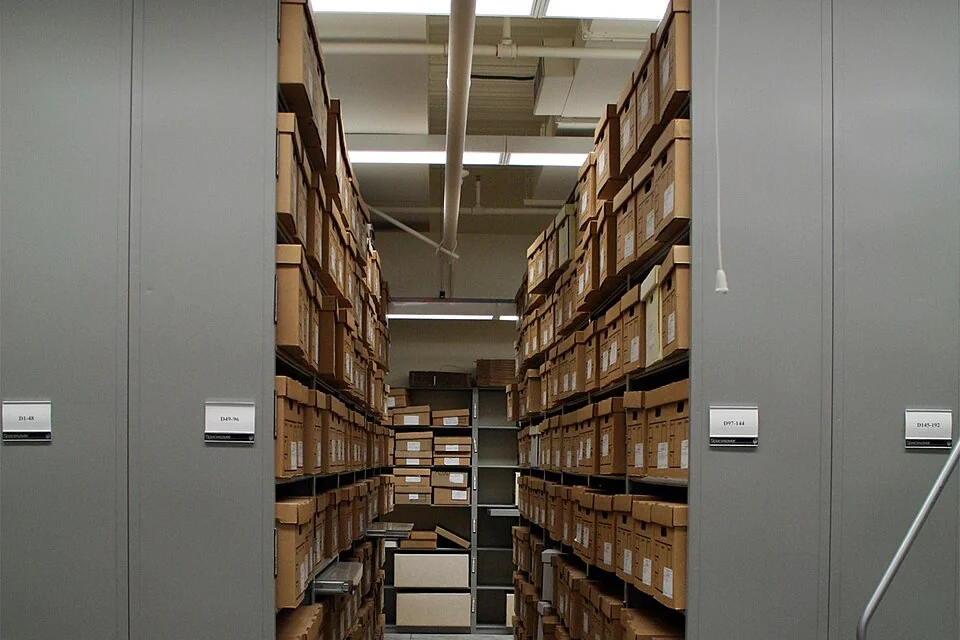
For readers researching Turlock history, the California Digital Archives offers online exhibits and selected government records. The Secretary of State’s agency description identifies historical maps, photographs, recordings and permanent records as part of the archives’ work. Many materials still require a request to archivists.
The 2026 race and useful contacts
The certified general-election list identifies Shirley N. Weber and Donald P. (Don) Wagner as the two candidates for November 3. Wagner’s listed occupation is Orange County supervisor.
- A missing ballot or a local voting question: contact Stanislaus County Elections at 209-525-5200, 1021 I Street, Suite 101, Modesto, CA 95354. The state’s county-office directory links to the county’s current services.
- State election help: the voter hotline is 800-345-VOTE (8683). The Secretary of State’s directory also lists language-specific hotlines and program contacts.
- Agency headquarters: 1500 11th Street, Sacramento, CA 95814, general information 916-653-6814. Choose the relevant division before sending business, archives or election paperwork.
