
Last updated
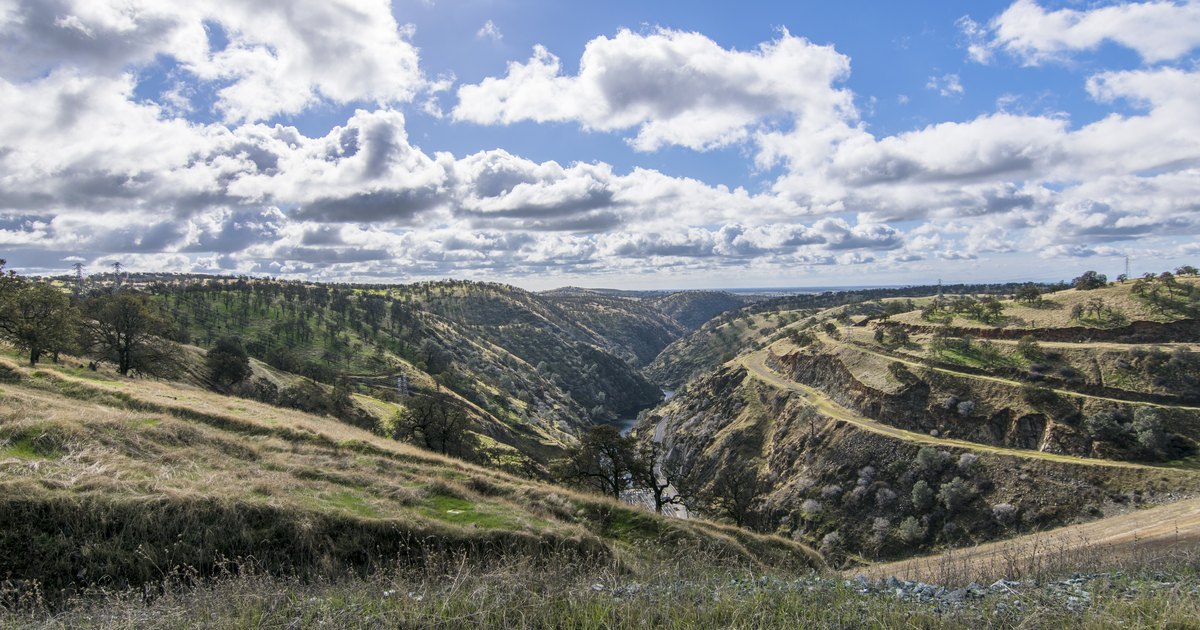
The canals beside Turlock’s roads are part of the reason the town grew. Before irrigation, much of this valley depended on winter rain and grain farming. In March 1900, water finally reached Henry Stirring’s cornfield near Ceres—a small delivery that marked the start of a much larger change.
Turlock Irrigation District had been organized almost thirteen years earlier, on June 6, 1887. It was California’s first irrigation district under the Wright Act. Getting from a vote to water in a field took lawsuits, uncertain financing and years of digging. TID’s history and its historical milestones record those dates.
A town built around the promise of water
The railroad had given Turlock its foothold. Irrigation gave more families a reason to settle. The Turlock Historical Society describes Mitchell estate land being divided into 20- to 40-acre parcels in the 1890s, followed by arrivals from the Midwest in 1903–04. Affordable land, a mild climate and the prospect of reliable water made a compelling combination.
Water changed what those farms could grow. Instead of relying mainly on rainfall for large grain fields, growers could establish orchards and other crops that needed a dependable summer supply. Irrigation did not create every local industry, but it helped make the agricultural landscape around Hughson, Keyes and Turlock recognizable today.
The secretary who refused to sign
One of the district’s first legal victories began with an apparent obstacle inside its own board. Secretary Roger M. Williams refused to sign $50,000 in bonds sold to Robert McHenry. According to Sol P. Elias’s 1924 history of the district, the refusal was deliberate: it created a test case to establish whether the new irrigation law would stand.
In Turlock Irrigation District v. Williams, decided in 1888, the California Supreme Court upheld the act and ordered him to sign. The canals depended on more than engineering. Investors needed confidence that a district could legally collect assessments and finance the work.
The wider battle even drew in a former president. The Modesto Irrigation District’s historical account describes Judge James A. Waymire backing canal completion with his own resources and hiring Benjamin Harrison during litigation over irrigation law. Harrison’s role was legal advocacy; the canal digging belonged to crews here in the valley.
La Grange: the dam that sends water toward town
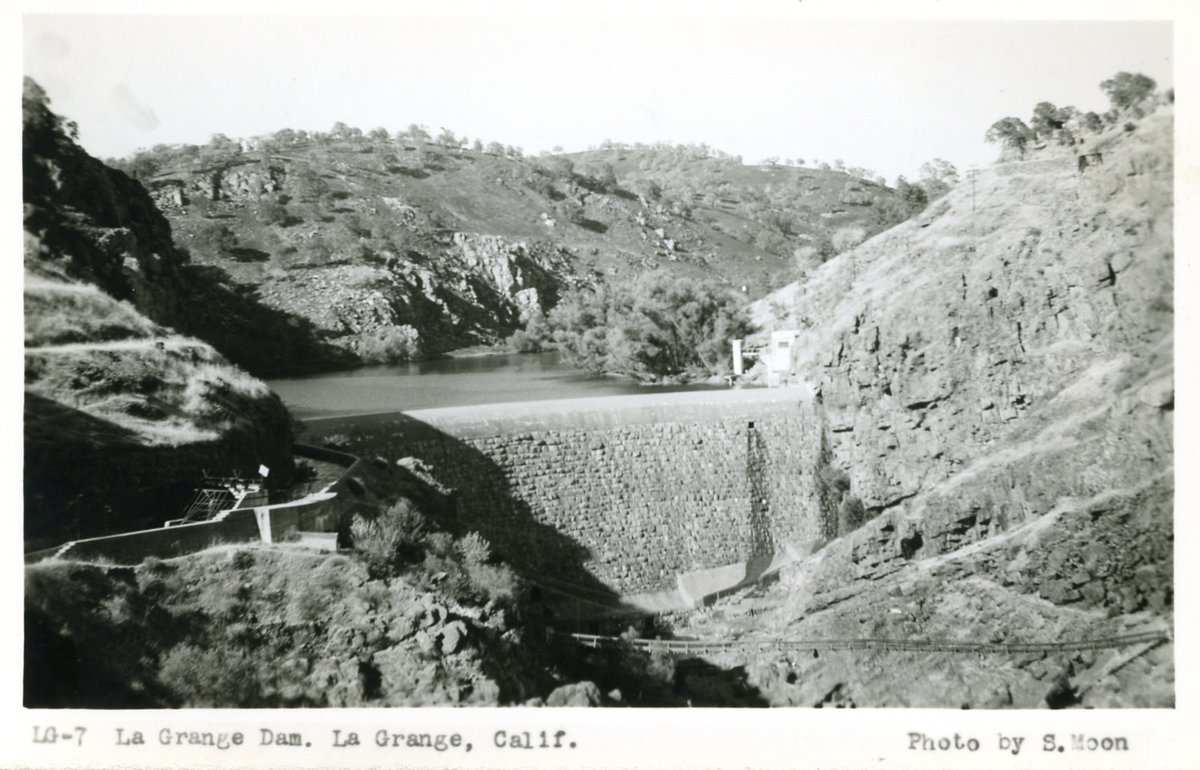
TID and Modesto Irrigation District completed La Grange Dam on the Tuolumne River in 1893. Its purpose is easy to misunderstand. La Grange holds relatively little water. It raises the river enough to direct water into the two districts’ separate canal systems.
A completed dam did not mean completed deliveries. George H. Tinkham’s 1921 county history records financing troubles and delayed wages, including carpenters stopping work in March 1900 until overdue pay was settled. That same month, Stirring irrigated his corn. The first water was a construction milestone and a practical test: could the system carry water all the way to a farmer who needed it?
The work continued long after that first delivery. Tinkham’s biography of Eugene A. Fuentes places him and his wife Delia in charge of a TID construction-camp boarding house below La Grange in November 1920. Fuentes also cared for 40 work mules. His brother-in-law Archie M. Soria supervised ditch construction. The canal network had cooks, animals, ditch tenders and families behind it, not just directors and dam plans.
Three places, three different jobs
La Grange, Turlock Lake and Don Pedro are connected, but they are not interchangeable. Knowing their jobs makes the system easier to follow:
- Don Pedro stores water. The original dam opened in 1923. The much larger replacement, completed in 1971, provides irrigation storage, hydroelectric generation and flood-control capacity. Don Pedro’s history.
- La Grange diverts it. Downstream releases reach the smaller dam, where water can enter TID’s or MID’s system or continue along the Tuolumne River.
- Turlock Lake balances deliveries. Built in the early 1910s and formerly called Davis and Owens Reservoir, this off-stream reservoir helps match canal supply to irrigation demand. It is part of the working water system, despite the recreational associations of its name. Turlock Lake’s role.
From the main canal, smaller branches—called laterals—carry water toward individual farms. TID describes roughly 250 miles of gravity-fed canals, about 90 percent concrete-lined. Gates, delivery schedules and measurement turn that downhill flow into an organized service. A canal full of water is only one part of getting the right amount to the right field. How TID’s irrigation system works.
Why the water district also sends an electric bill
TID entered the retail electric business in 1923, the year the original Don Pedro project was completed. Its Don Pedro powerhouse history ties the development of public electricity to the dams and reservoirs. Water releases could also generate power, creating a second service that now reaches households and businesses well beyond the farms receiving irrigation deliveries.
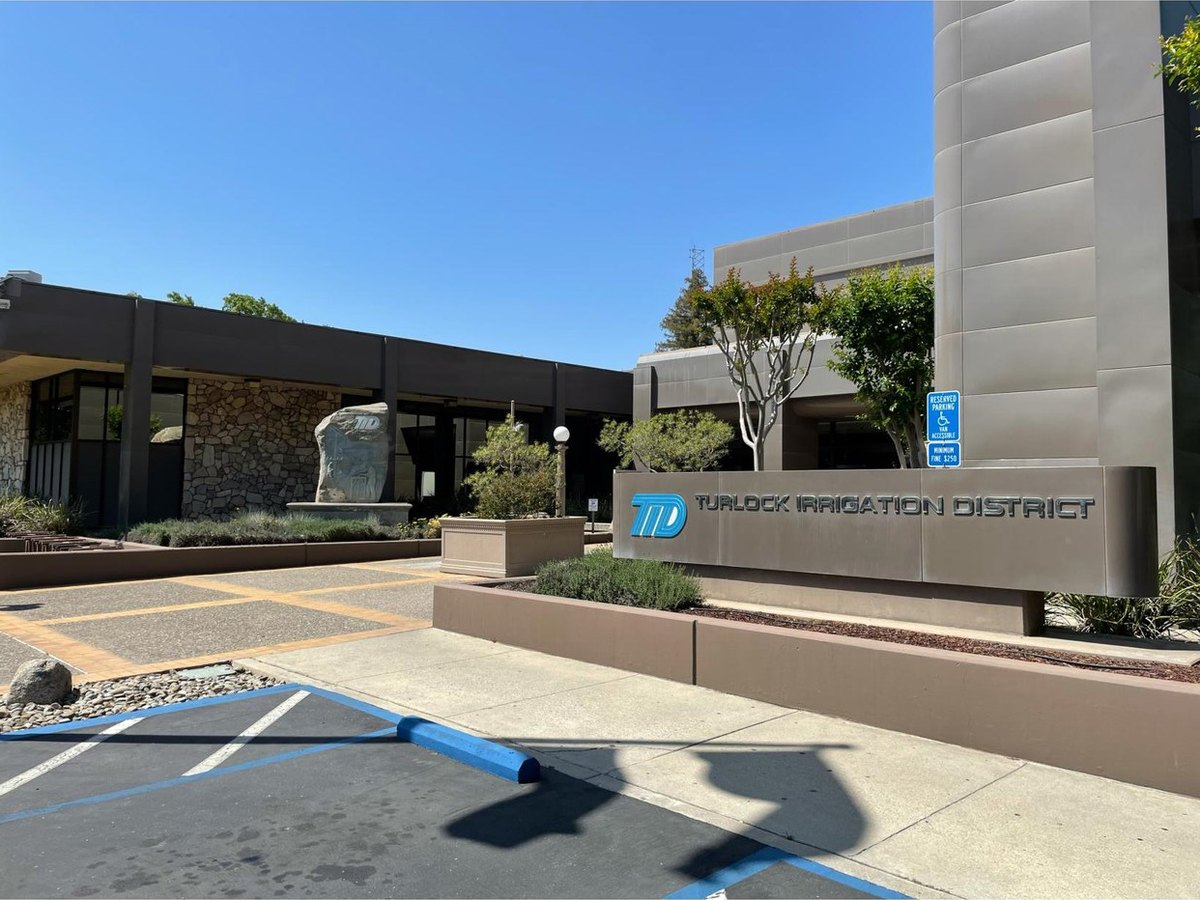
TID is a public district with its own five-member elected board, rather than a department of Turlock City Hall. That distinction matters when you want to follow a rate proposal, canal project or electricity decision: the relevant public meeting may be at TID. Its main office is at 333 E. Canal Drive, Turlock.
The next experiment: solar panels over canals
Project Nexus adds a new question—what happens when solar panels shade a canal while generating electricity? TID says both pilot sites were commissioned by August 2025, with researchers from UC Merced studying water savings, water quality, aquatic growth and operation of the equipment.
These are two test sites, not a solar roof over the entire network. The project’s evaporation savings are still being measured.
Related reading: History of Turlock · the nearby towns.
