
TURLOCK ON SCREEN · DOWNTOWN & THE REGION
In December 2013, Turlock acquired a guitar shop and a gospel church that existed only for the camera. Christian Mingle put familiar downtown storefronts beside carefully invented ones—and left the city with a small, surprisingly detailed piece of film history.
Written and directed by Corbin Bernsen, the 2014 film stars Lacey Chabert as Gwyneth Hayden, a marketing executive who signs up for ChristianMingle.com while misrepresenting her faith. The romantic comedy follows what happens when that deception is exposed. Home Theater Films’ own synopsis places her spiritual change at the centre of the story. For local viewers, a second story unfolds in the background: recognising Turlock.
Updated 2026.
Why Turlock became the set
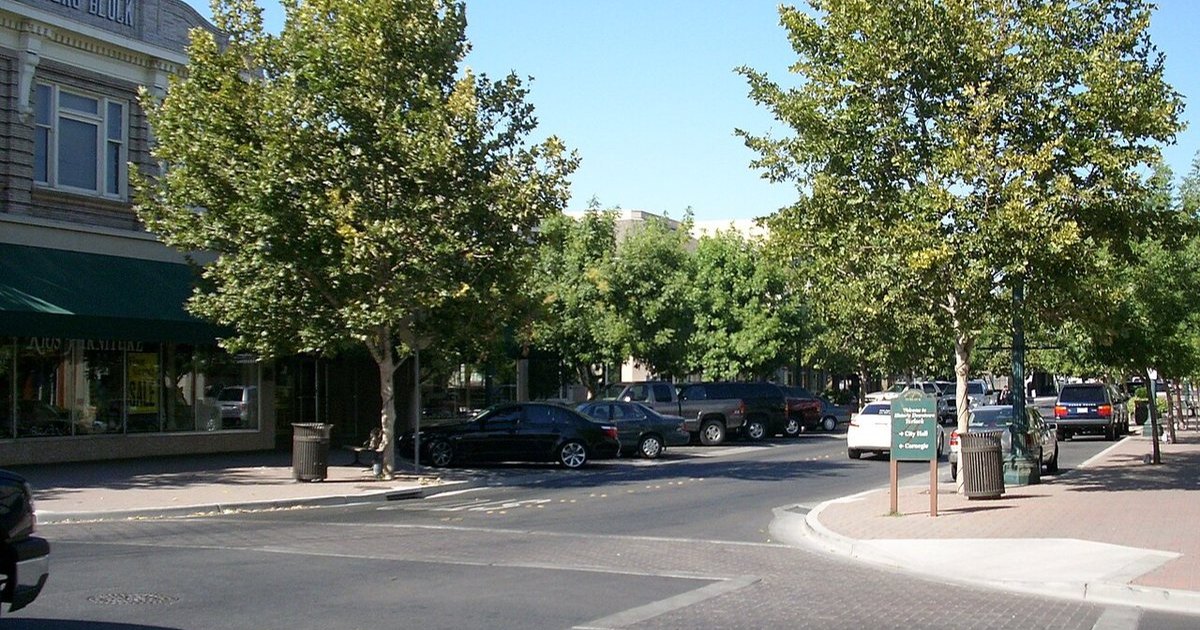
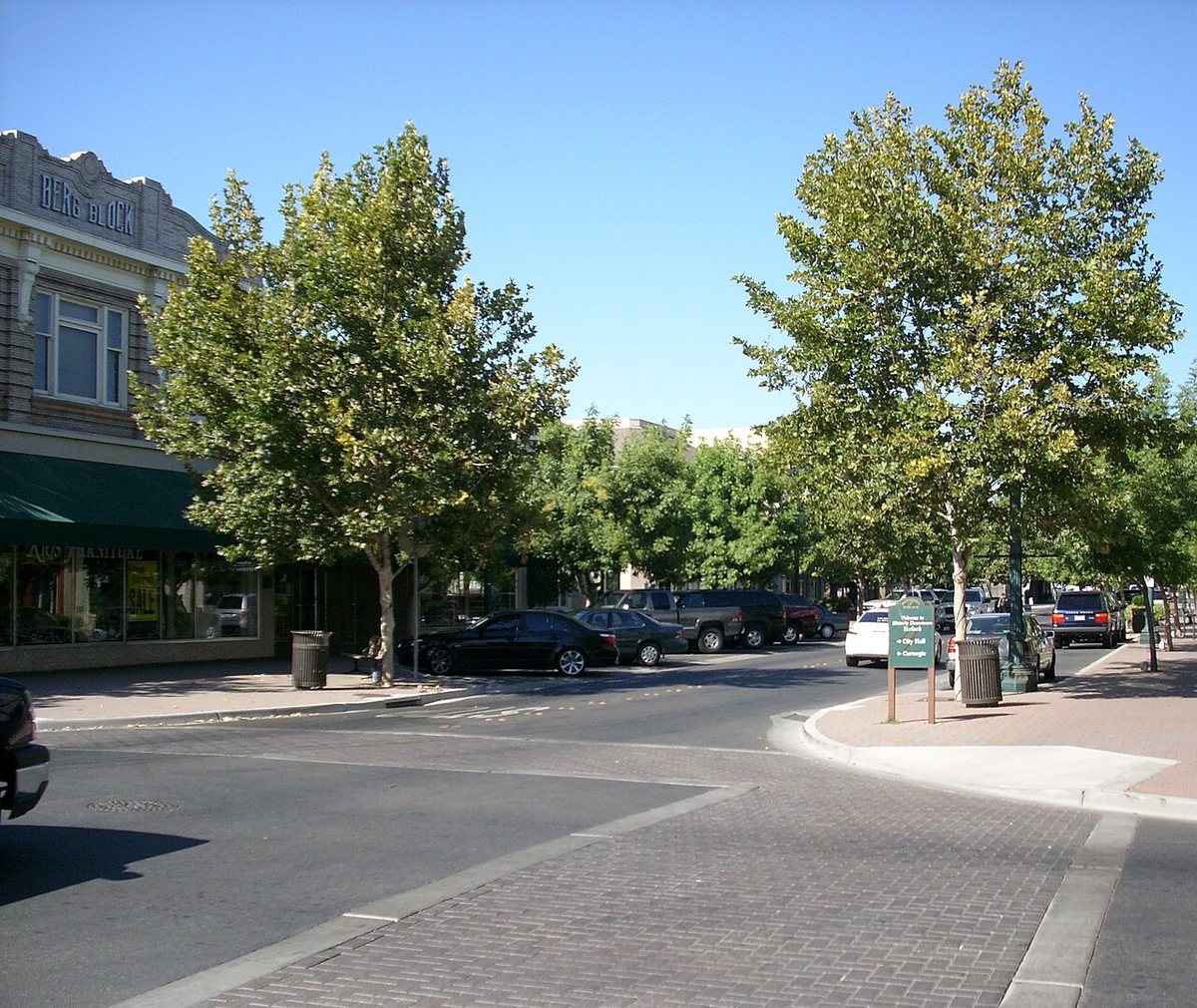
The connection began with executive producer Matt Swanson inviting Bernsen to his hometown. In Bernsen’s own account of the shoot, he explains that he had imagined a main-street studio backlot with a slightly storybook quality. Turlock offered the look he wanted, with the useful difference that its street was real.
His account also reveals a trick hidden in plain sight. Gwyneth’s apartment interior was filmed in a house several miles from the downtown exterior of her building. Local businesses supplied items used in the apartment and other sets. The geography that feels continuous on screen was assembled through editing, location choices and community contributions.
Bernsen’s account is an enthusiastic recollection by the filmmaker, so it is best read alongside reporters’ coverage of what happened on the streets. Together they explain both the appeal of downtown and the work required to turn it into a movie setting.

The day Main Street changed jobs
Turlock City News reported from downtown in December 2013, when crews closed West Main Street. The temporary Mike’s Guitars and WJC Gospel Church were part of the production. Hundreds watched, while more than a hundred extras gathered for the day’s work.
Rufus Keaton had arranged to leave work after being offered a pastor role. When the production’s first choice arrived, he became an extra instead. The report catches a last-minute change that would otherwise disappear behind the finished film.
Inside the temporary church, tracks and lights had to move to achieve Bernsen’s desired shot of Chabert walking down the aisle. The scene took planning, rearrangement and patience before the cameras could capture something that would look effortless.
When filming wrapped, the Turlock Journal reported three weeks of local shooting, with remaining scenes to be made in Los Angeles. Turlock Film Commission founder Michael Everett estimated that about 500 local people had served as extras across the production. The film was a co-production involving Home Theater Films and Creation Lab Pictures; the local contribution extended well beyond scenery.
A short trail through the movie’s Turlock
A Journal retrospective identifies these filming-era locations. Some storefront tenants have since changed.
- Lisa’s Cookie Jar, 115 S. Broadway: Gwyneth and Paul’s first date. Owner Lisa Fernandes said scouts stopped for coffee and chose the bakery for the film.
- Sushi Cuisine, 3208 W. Monte Vista Avenue: the location of their second date, away from the downtown block that dominates many local memories of the production.
- Main Street Footers: their third date takes them to the local hotdog shop.
- The Mercantile Building: Gwyneth’s apartment exterior, above Joe’s Clock & Watch Shop’s 2013 location.
- Lightly Used Bookstore, 141 N. Center Street: where Gwyneth buys a Bible and introductory reading to navigate unfamiliar beliefs.
Watch how the dates move between different kinds of meals and different parts of town. Ordinary businesses give the romance a recognisable local texture.
The premiere came home
The production returned for a Turlock premiere on October 10, 2014. The Journal’s contemporary preview announced Bernsen and Chabert’s attendance, with Swanson, Everett and others involved in making the film. The red-carpet event at Regal Turlock was sold out; additional screenings were listed in Turlock and at Modesto’s Brenden theatre.
That changed the relationship between town and production. People who had watched from the opposite sidewalk—or spent a day trying to get into the background—could see the completed film together. For a project built partly from borrowed space, donated furnishings and local participation, the homecoming mattered as much as the visiting stars.
The connection continued in another film
Bernsen later returned to the area for Life With Dog. The Journal’s reporting on that production describes a house at Turlock’s Westside Ministries campus serving as a central location and production base, with Ceres police facilities and streets used for other scenes. Bernsen credited local cooperation with helping a small production stretch its resources.
That follow-up is the interesting consequence of Christian Mingle: Turlock’s usefulness to a filmmaker included the people willing to help organise a shoot. The city could supply a street, a room, a meal, a background performer or a solution to the next practical problem.
For another regional film story—with a very different relationship between hometown and filming location—read George Lucas and Modesto. Explore the streets and arts venues in the Turlock Guide, or return to the broader History of Turlock.
