
PEOPLE & PLACES · TURLOCK AND STANISLAUS COUNTY
A student sorting out financial aid in Turlock and a concertgoer finding a seat in Modesto may pass the same name without knowing the connection. Mary Stuart Rogers’ foundation turned a share of the Carnation fortune into scholarships, classrooms and a theater, continuing her work after her death.
Stanislaus State’s Mary Stuart Rogers Building makes her name familiar in Turlock. The campus became an important part of a philanthropic network based in Modesto and reaching well beyond the Valley.
Updated 2026.
From Carnation stock to a scholarship fund
The source of the money was a national business; the priorities were personal. In an interview with Lewis & Clark College, her son John explained that the sale of Carnation to Nestlé turned his mother’s stock into the financial foundation for her giving. As a mother of four, she had repeatedly stressed education at home. Scholarships gave her a way to help students put that lesson into practice.
Stanislaus State’s Spring 2015 magazine dates the foundation’s establishment to 1985. Mary directed it until her death in 1993; John then became its president. That succession explains why later news stories often feature John, his wife June and their daughter Janet, even when the program carries Mary’s name.
John told Lewis & Clark that his involvement there began by carrying on the wishes of his brother Jim, a 1964 graduate. University President Michael Mooney had been scheduled to meet Jim on the day Jim died. John followed through on the meeting and, eventually, on the support. An Oregon campus became part of the family’s giving through that relationship.
The Turlock connection starts with students
The foundation’s first Mary Stuart Rogers scholarship program began at Stanislaus State in 1991. By 2024, the university reported more than $3.2 million in support and more than 600 recipients. The program considers academic achievement, community service and the obstacles students have overcome; it serves upper-division undergraduates and teaching-credential candidates. The university’s 2024 account gives a useful sense of who that means.
One recipient, Malina Duran of Los Banos, had spent two hours traveling by bus to reach Merced College. She graduated there with a 4.0 GPA and pursued creative media at Stan State, while writing for local and campus publications. Another, Jose Rojas, had already organized sculpture workshops in Delhi and fitted out a van as a summer mobile library before pursuing his teaching credential.
The 2025 class brought another unexpected combination. Kira Baxter paired art history with chemistry to prepare for art conservation after transferring from Modesto Junior College. Chemistry would help her understand how to treat fragile objects; art history would help her understand what she was preserving. A foundation rooted in a milk company’s stock was helping a future conservator learn to protect cultural history.
A building for the practical side of college
The Mary Stuart Rogers Educational Services Gateway Center was completed in 2002, according to the California State University’s capital-planning history. It brought student services and administrative functions together. The university’s dated campus chronology records the John Stuart Rogers Faculty Development Center opening in January 2003.
Today the MSR Building’s first floor includes financial aid and scholarships, enrollment services, recruitment and the cashier’s office. That is an apt place for her name: the offices help students navigate the practical work of getting into college and staying there.
The foundation’s campus connections extend north to the Mary Stuart Rogers Music Center at Willamette University in Salem, Oregon. The McHenry Museum’s account of regional philanthropy places that project alongside buildings at Stan State, Modesto Junior College and Lewis & Clark. Turlock’s campus is one stop on a much larger trail.
Why the theater in Modesto carries her name
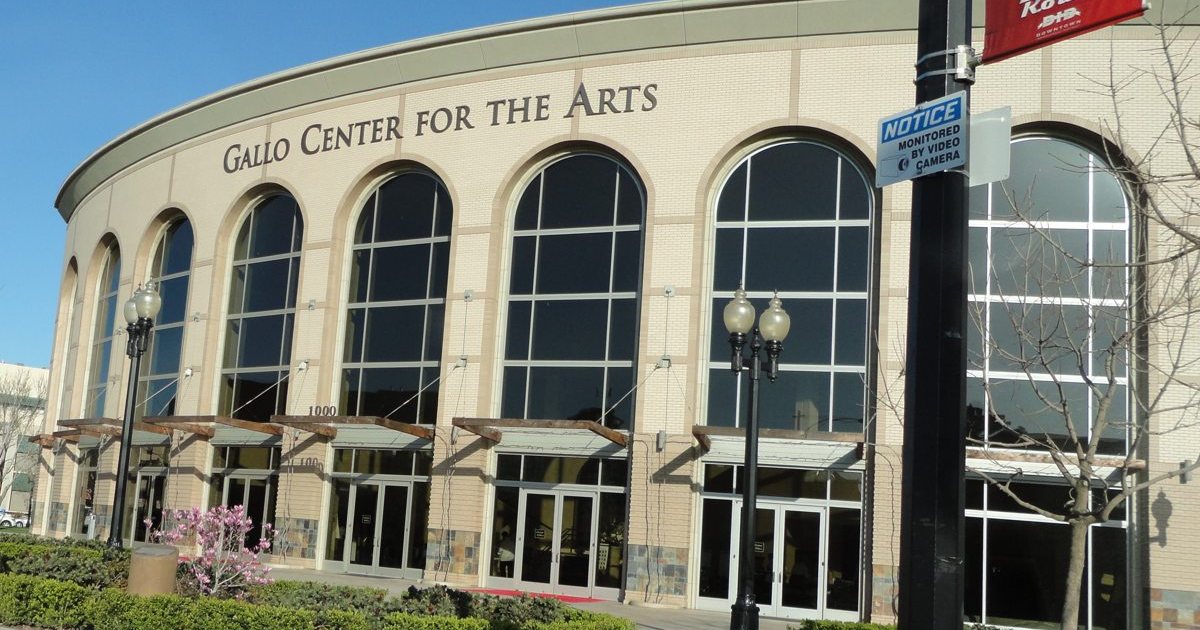
Before the Gallo Center for the Arts existed, a Stanislaus County report from April 2001 recorded a $5 million contribution from the Mary Stuart Rogers Foundation toward the performing-arts project. The report described the Gallo family’s $10 million pledge and additional fundraising led by Marie Gallo. It is a reminder that the familiar Gallo name at the entrance represents a project assembled from several major commitments.
The center’s larger auditorium is the Mary Stuart Rogers Theater, seating approximately 1,248. One detail worth noticing has nothing to do with a donor plaque: retractable draperies allow its acoustics to be adjusted for different performances. A room designed for unamplified music can also be made suitable for speech and amplified entertainment.
For a Turlock resident, there are two easy ways to encounter her story: walk through the university, or take a seat at a show in Modesto.
Explore more of the region in our History of Turlock and Turlock Guide. For another story hidden in a familiar local surname, read about the Bonanders and their connections to downtown business.
